Why Business Text Marketing Can Close Sales Funnel Gaps
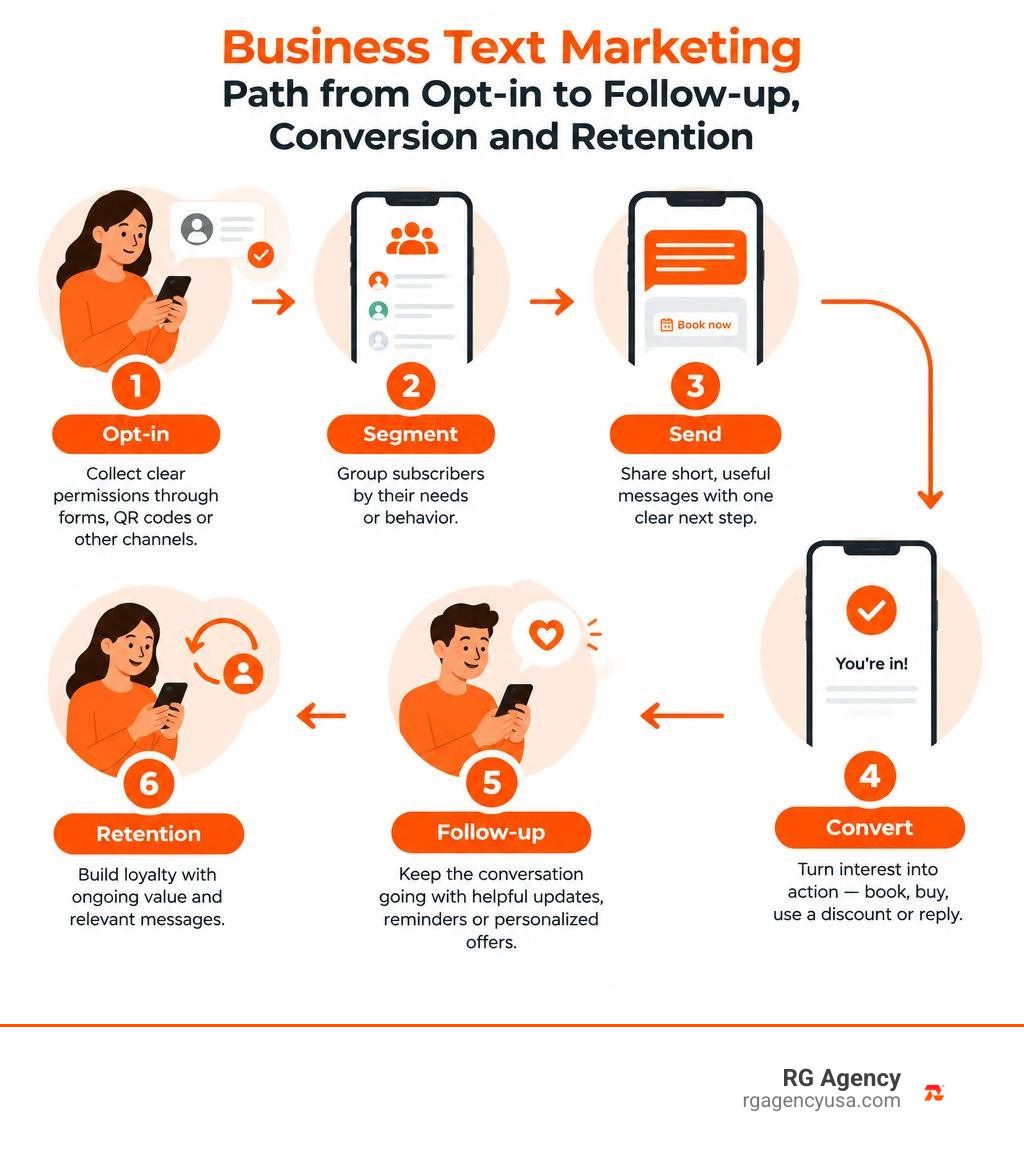
Business text marketing uses permission-based SMS or MMS messages to move people from interest to action. Start by collecting clear opt-ins, segmenting subscribers by their needs or behavior, and sending short, useful messages with one clear next step – such as booking an appointment, using a discount, finishing a purchase, or replying with a question.
For small businesses, texting can connect marketing channels that often work in isolation. A search visitor can join your list through a form or QR code. A lead can receive a timely follow-up. A customer who abandons a cart can get a reminder. And your team can handle replies in the same conversation instead of losing momentum between email, social media, and phone calls.
SMS is not a replacement for every channel. It is a fast, direct layer that can make your existing SEO, paid ads, email, and website traffic work harder – provided every message is relevant, consent-based, and easy to opt out of.
I am Roger Aguiar, Owner and CEO of RG Agency, where I have helped businesses use data-driven SEO, paid media, automation, and full-funnel strategy to generate measurable leads and sales. In this guide, I will show how business text marketing can fit into that system without adding more disconnected marketing work.
Important business text marketing terms:
What Is Business Text Marketing and Why Does It Convert?
Business text marketing is the strategic delivery of targeted, permission-based SMS (Short Message Service) and MMS (Multimedia Messaging Service) texts to contacts who have explicitly asked to hear from your brand. Unlike consumer-grade texting between friends, commercial texting utilizes specialized software that scales delivery, manages legal compliance, tracks individual user actions, and triggers automated replies.
The primary reason commercial texting converts so reliably comes down to human habits. Most people keep their mobile devices within arm’s reach throughout the day. While marketing emails often languish unread in promotional folders, text messages cut through the digital clutter instantly. Industry benchmarks show that text messages boast an average open rate of up to 98%, with over 90% of messages read within just three minutes of receipt.
Furthermore, the average response window for an SMS is roughly 90 seconds, compared to 90 minutes or more for email. When you understand how digital marketing can boost your business, integrating a direct, high-attention communication channel is the most logical step toward eliminating conversion bottlenecks.
| Metric | SMS Marketing | Email Marketing |
|---|---|---|
| Average Open Rate | 98% | 20% – 25% |
| Average Response Time | ~90 seconds | ~90 minutes |
| Typical Click-Through Rate (CTR) | 10% – 30% | 2% – 5% |
| Primary Inbox Delivery | Over 99% | Variable (Spam/Promo tabs) |
| Character Limit (Standard) | 160 characters | Unlimited |
How Business Text Marketing Works Across the Customer Journey
Commercial texting performs best when it is mapped directly across each phase of the sales cycle rather than treated as a sporadic promotional megaphone.
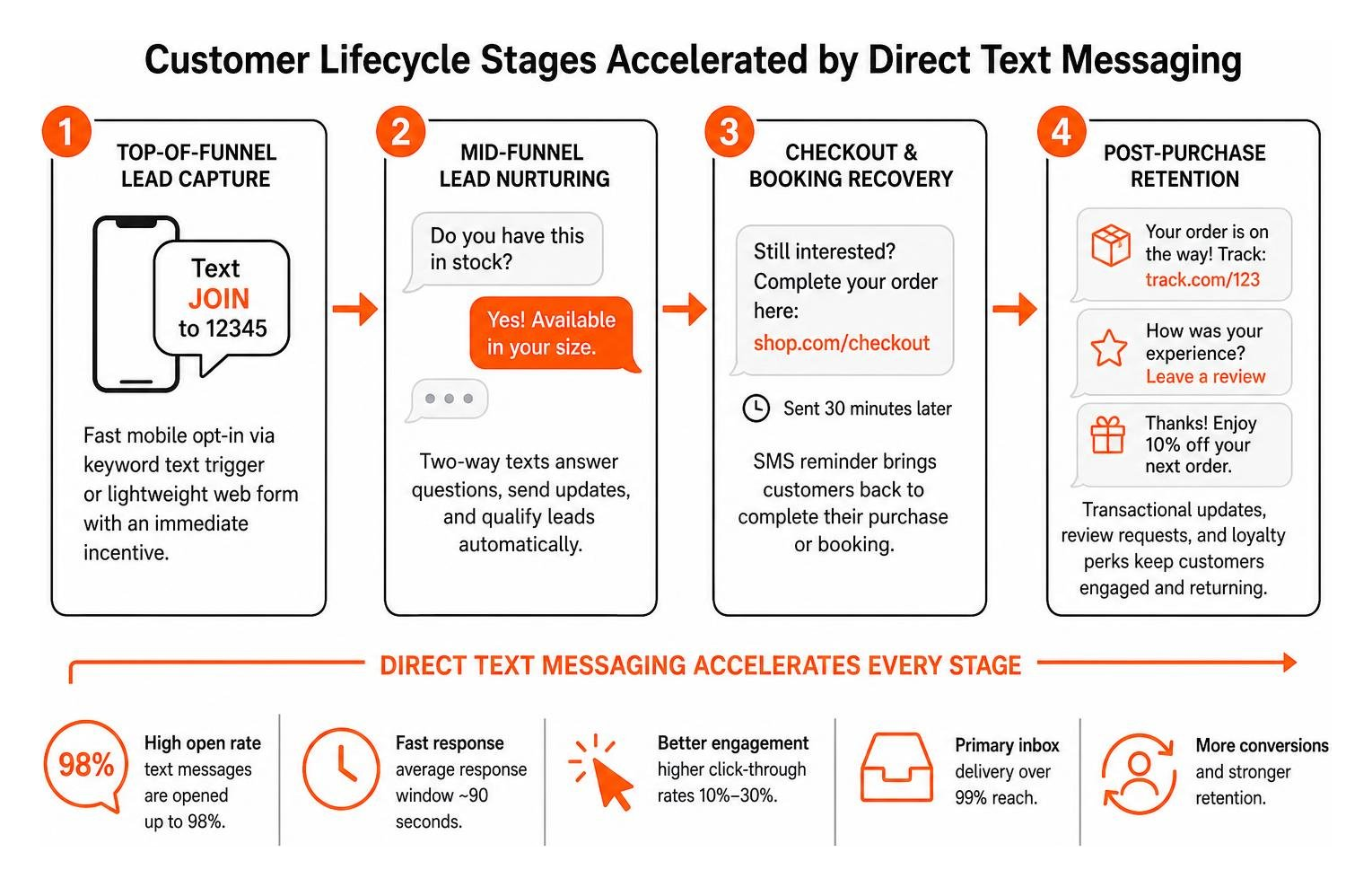
- Top-of-Funnel Lead Capture: Mobile visitors discover your brand through organic search, local listings, or paid advertising. Instead of asking them to fill out a lengthy contact form, you offer a fast mobile opt-in via a keyword text trigger or a lightweight web form offering an immediate incentive.
- Mid-Funnel Lead Nurturing: Once a prospect shows interest, timely two-way texts answer product questions, send localized inventory updates, or qualify leads automatically using conversational AI agents.
- Checkout & Booking Recovery: If a customer abandons their online shopping cart or exits an appointment scheduling page, an automated SMS reminder sent 30 minutes later brings them back with a direct link to complete the transaction.
- Post-Purchase Retention: After a sale, transactional messages deliver real-time shipping updates, followed days later by an automated review request or VIP loyalty perk, supporting your broader digital marketing channels.
Bulk SMS vs. Two-Way Messaging vs. Automated Workflows
Navigating the text marketing landscape requires understanding the three core message delivery formats:
- Bulk SMS (Broadcasts): One-to-many messaging used for broad announcements, store-wide flash sales, seasonal events, or emergency updates. It reaches thousands of opted-in contacts simultaneously.
- Two-Way Conversational Texting: One-to-one communication where customer service, recruiting, or sales teams interact directly with individual prospects. This format allows your team to answer questions, handle objections, and close deals in real time.
- Automated Workflows (Drip Sequences): Pre-built logic sequences triggered by specific customer actions. For example, when a user signs up on your site, an automated series welcomes them on Day 1, sends a helpful resource on Day 3, and delivers an exclusive discount code on Day 7 if no purchase has occurred.
High-Impact Campaigns: From Lead Capture to Retention
To drive maximum ROI, your campaigns must deliver tangible value in exchange for the customer’s phone number. The most successful text initiatives balance urgent promotional incentives with helpful transactional support.
- Time-Sensitive Flash Promotions: Create genuine urgency by offering exclusive, limited-window discounts (e.g., “Take 20% off for the next 4 hours only”). The speed of text delivery ensures your audience sees the promotion while it is still active.
- Abandoned Cart Recovery: Texting a shopper a direct checkout link with a small incentive can recover up to 30% of lost e-commerce checkouts.
- Text-to-Pay Capabilities: Modern platforms allow service businesses and retailers to generate secure payment links sent via text, allowing clients to settle invoices or pay deposits in seconds.
- Automated Review Requests: Send an automated SMS 24 hours after a service or product delivery asking for feedback, linking straight to your Google Business Profile to build local authority.
- VIP Loyalty Perks: Provide your most active subscribers with early access to product releases, invitation-only sales, and birthday rewards using structured loyalty programs.
Proven Strategies to Grow a Compliant Subscriber List
You cannot buy phone lists; you must build your audience organically through explicit opt-ins. Implement these proven capture methods:
- Keyword Opt-In Campaigns: Invite customers to text a specific word to your number (e.g., “Text AUSTIN to 555888 for VIP deals”) on print collateral, billboards, vehicles, or event signage.
- Two-Step Mobile Popups: On mobile devices, utilize tap-to-join links where clicking a button automatically opens the user’s native messaging app with your keyword pre-filled.
- Point-of-Sale QR Codes: Place scannable QR codes on checkout counters, receipts, packaging, and table tents that immediately launch a text opt-in sequence.
- Loyalty Club Integration: Encourage shoppers to join your VIP rewards program at checkout by providing their mobile number, establishing a long-term engagement channel using our loyalty program SMS playbook.
E-Commerce and Service Campaign Types That Drive Revenue
Regardless of your underlying platform or business model, direct messaging integrates seamlessly into existing digital storefronts. If you manage an online store or service site, you can review our technical setup guides for running SMS on WordPress, connecting your Squarespace store with direct text messaging, or configuring Wix SMS marketing.
For appointment-based businesses like clinics, salons, and home services, two-way confirmation texts can cut no-show rates by up to 40%, keeping service schedules full and predictable.
Essential Features and Platform Capabilities to Look For
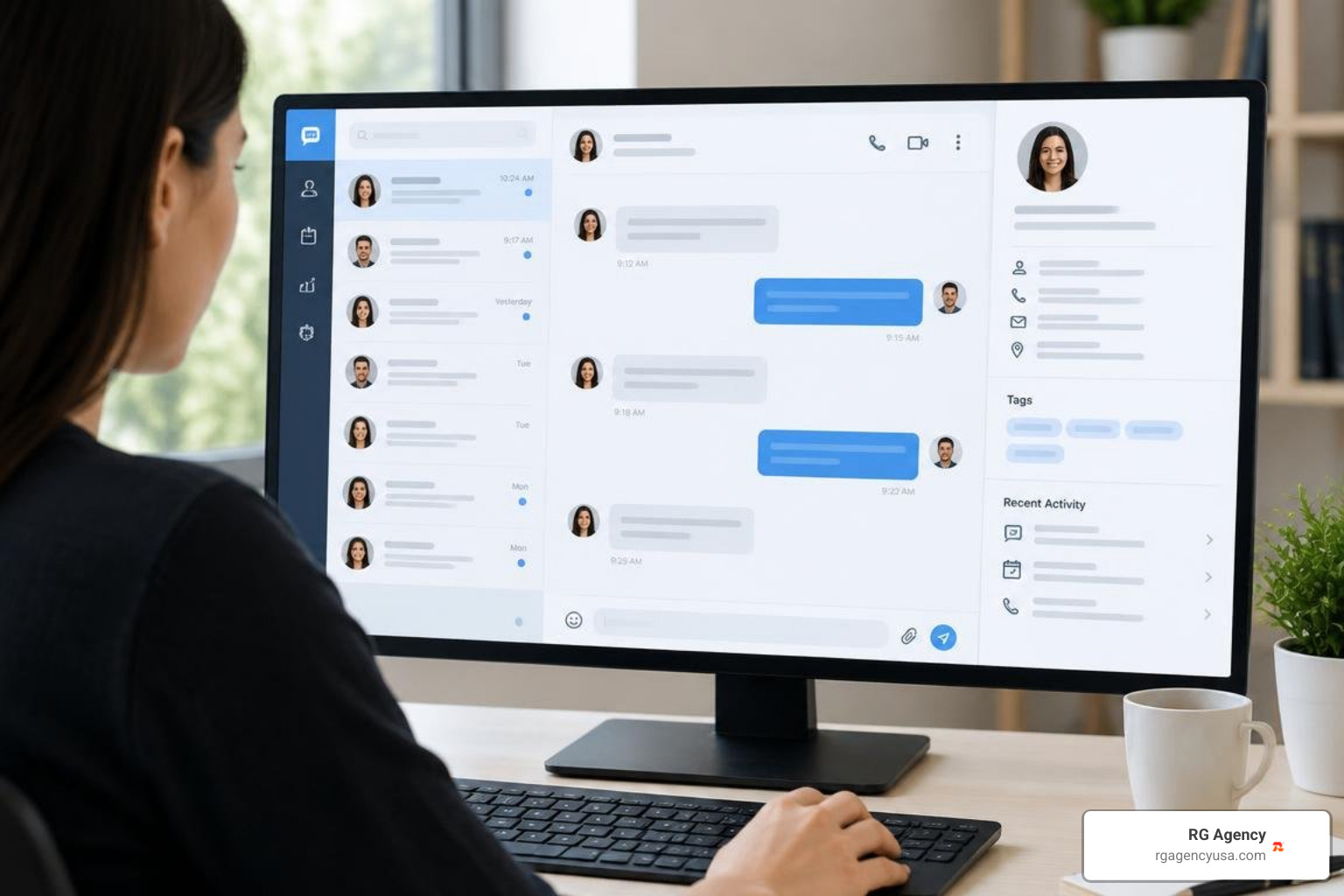
When selecting enterprise-grade software to power your campaigns, look for capabilities that scale alongside your operation:
- Number Type Flexibility: Ensure the software supports 10-digit long codes (10DLC) for local brand presence, toll-free numbers for high-throughput messaging, and dedicated short codes for enterprise mass texting.
- MMS Rich Media Support: Look for native tools that let you embed images, animated GIFs, audio files, and downloadable calendar invites directly into your outbound texts.
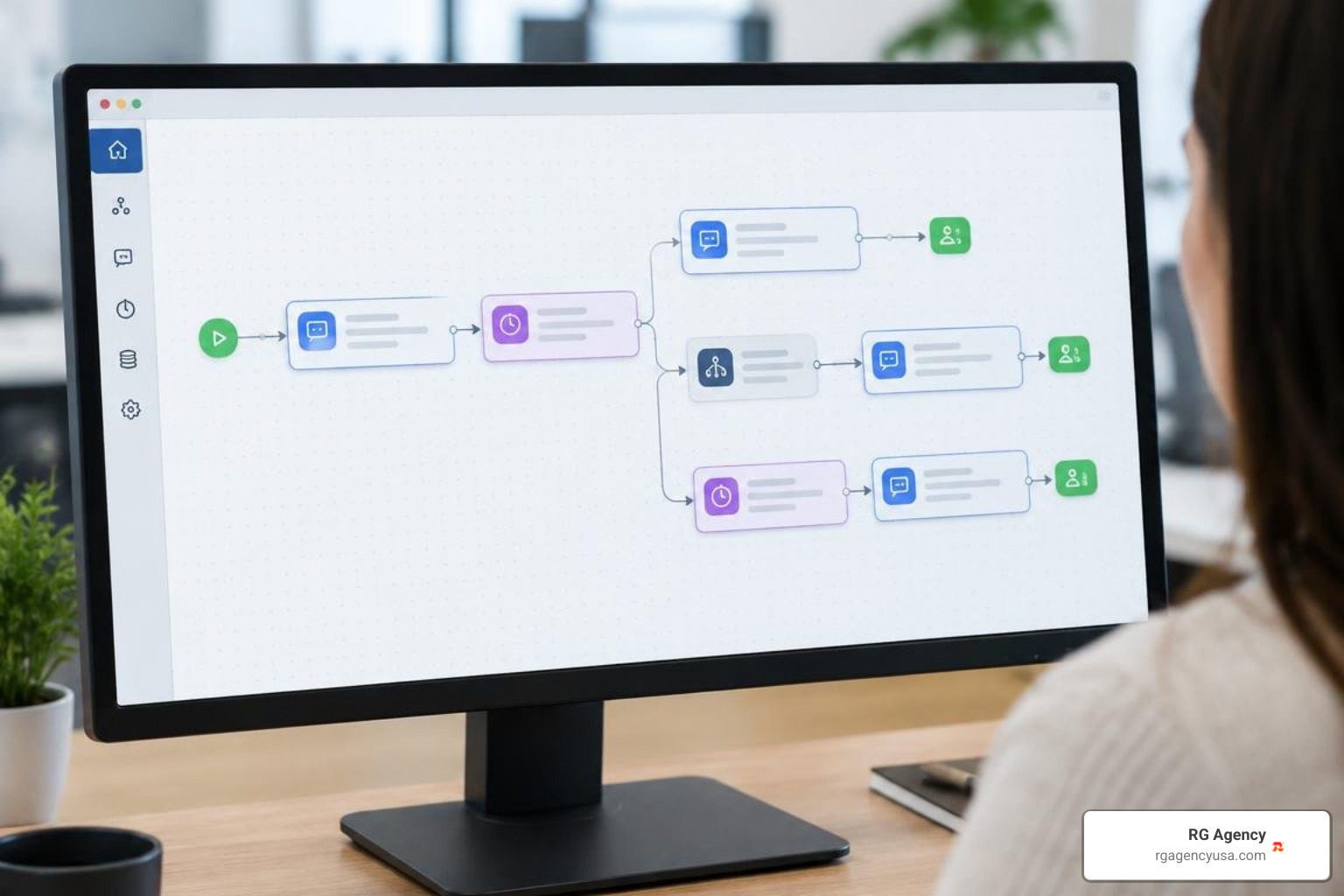
- Visual Workflow Builders: A drag-and-drop workflow canvas allows you to construct multi-branch conditional drip sequences without technical coding.
- AI-Powered Response Assistants: Modern platforms feature generative AI that pulls data from your knowledge base to resolve common inquiries, route complex conversations to human staff, and qualify inbound leads automatically.
Integrating Business Text Marketing with Your Existing Tech Stack
Text messaging produces the highest returns when it functions in harmony with your broader marketing ecosystem. A unified tech stack prevents data silos and stops customers from receiving contradictory messages across different channels.
Synchronizing your text platform with your Customer Relationship Management (CRM) system ensures that sales representatives can see every text, email, and website interaction in a single contact record. Furthermore, combining SMS with our dedicated email marketing services allows you to design coordinated cross-channel sequences. For example, you can send an in-depth product education email first, followed 48 hours later by a quick text reminder to those who did not open the email.
For a deeper dive into multi-channel journey planning, explore our guide to streamlining your email sequences as well as academic research on multi-channel consistency from the Master’s in Integrated Marketing Communications program at Georgetown.
Understanding Pricing Models and Message Delivery Costs
Evaluating text marketing software requires balancing two distinct cost components:
- Software Subscription Fees: Most providers charge a monthly platform fee based on your feature requirements, active contacts, and dedicated phone numbers. Plans typically range from $25 to $300+ per month.
- Per-Message Credits & Carrier Surcharges: Standard SMS messages (up to 160 characters) generally cost between $0.01 and $0.05 per text segment. MMS messages consume 2 to 3 credits each. Additionally, major cellular carriers pass through minor delivery surcharges (fractions of a cent per message).
Many platforms also offer flexible pay-as-you-go credits for seasonal businesses that only send text blasts during peak quarters, eliminating ongoing monthly commitments.
Compliance Essentials: TCPA, 10DLC, and Carrier Guidelines
Because mobile inboxes are private spaces, text messaging is strictly regulated. Non-compliance can lead to severe fines, filtered messages, or total carrier blacklisting.
Navigating TCPA, CTIA, and 10DLC Brand Registration
To protect your business and maintain high deliverability, follow these foundational legal frameworks:
- Telephone Consumer Protection Act (TCPA): U.S. federal law requires businesses to obtain “prior express written consent” before sending commercial text messages via automated dialing systems. You cannot assume consent simply because a customer provided their phone number during a past transaction.
- The Campaign Registry (10DLC Registration): All standard 10-digit local numbers used for Application-to-Person (A2P) commercial texting must be registered with The Campaign Registry. This process verifies your business identity (EIN, legal address) and approves your specific messaging use cases, assigning a Trust Score that dictates your daily throughput speed.
- Toll-Free Verification: If you send messages via toll-free numbers, your carrier requires a manual verification submission that details your opt-in methods, taking anywhere from 2 to 14 business days for approval.
Message Hygiene, Opt-Out Rules, and SHAFT Compliance
Maintaining strong carrier reputation and consumer trust requires continuous adherence to industry best practices:
- Mandatory Opt-Out Mechanisms: Every initial promotional message must clearly state how to unsubscribe (e.g., “Reply STOP to cancel”). Platforms must immediately honor keyword commands such as STOP, END, CANCEL, UNSUBSCRIBE, or QUIT.
- Help and Identification Disclosures: Messages must identify your business name and provide assistance commands (e.g., “Reply HELP for support”).
- Quiet Hours: In accordance with federal and state laws, promotional texts must only be delivered between 8:00 AM and 9:00 PM in the recipient’s local time zone.
- SHAFT-C Prohibitions: Cellular carriers strictly prohibit commercial messaging related to Sex, Hate, Alcohol, Firearms, Tobacco, and Cannabis across standard shared numbers, with narrow exceptions requiring strict age-gating verification.
Tracking Performance and Calculating Text Marketing ROI
To ensure your campaigns generate positive net revenue, monitor core performance metrics inside your analytics dashboard:
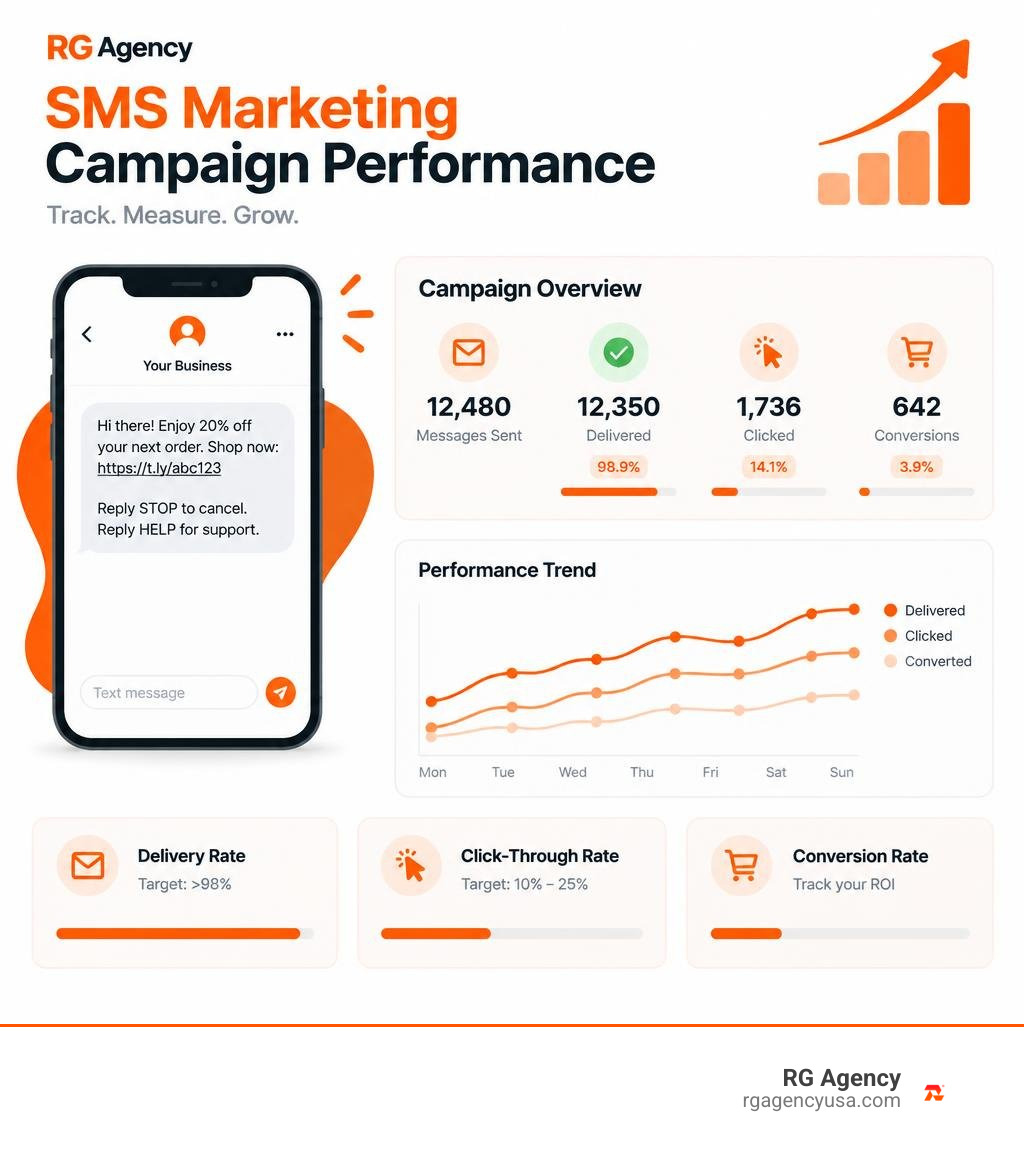
Key Performance Metrics to Monitor in Every Send
- Delivery Rate (Target: >98%): The percentage of sent messages that successfully reached the recipient’s handset. Drops in delivery indicate carrier filtering or outdated phone numbers.
- Click-Through Rate (Target: 10% – 25%): The percentage of recipients who clicked a shortened trackable link within your message.
- Conversion Rate: The percentage of recipients who completed the target goal (purchase, appointment booking, lead form submission) after clicking.
- Opt-Out Rate (Benchmark: <1% per send): The volume of contacts replying STOP. A sudden spike indicates excessive messaging frequency or irrelevant content.
- Revenue Per Message (RPM): Calculated by dividing total attributed revenue by the total number of messages sent in a campaign.
Frequently Asked Questions About Business Texting
Is business text marketing legal for all industries?
Yes, commercial texting is legal across virtually all standard B2B and B2C industries, provided you obtain explicit written opt-in consent and provide clear opt-out instructions. However, heavily regulated sectors—such as alcohol, adult entertainment, firearms, and cannabis—face strict carrier restrictions under SHAFT guidelines and require specialized verification protocols.
How much does business text marketing typically cost?
Costs depend on your audience size and sending volume. Most small to medium-sized businesses invest between $50 and $250 per month, which covers software subscriptions, dedicated 10DLC numbers, and a credit allotment of 1,000 to 10,000 messages. Due to conversion rates often exceeding 10%, the return on investment can be substantial.
What is the ideal sending frequency for business SMS?
For most brands, sending 2 to 4 targeted messages per month represents the sweet spot for promotional broadcasts. Transactional notifications (order tracking, appointment reminders) can be sent as often as necessary based on customer-initiated actions. Always prioritize message relevance over frequency to prevent list fatigue.
Conclusion
When executed with strategic precision, commercial text messaging serves as the vital connective tissue across your entire marketing ecosystem. It captures fleeting mobile interest, nurtures leads in real time, and turns abandoned checkouts into completed sales.
At RG Agency, our Austin-based team builds integrated marketing systems that unite data-driven SEO, paid advertising, automated funnels, and high-converting messaging workflows. If you are ready to implement a high-performing text strategy that delivers measurable revenue, explore our specialized SMS marketing services today.