Get Paid to Advertise on Instagram With Brand Partnerships
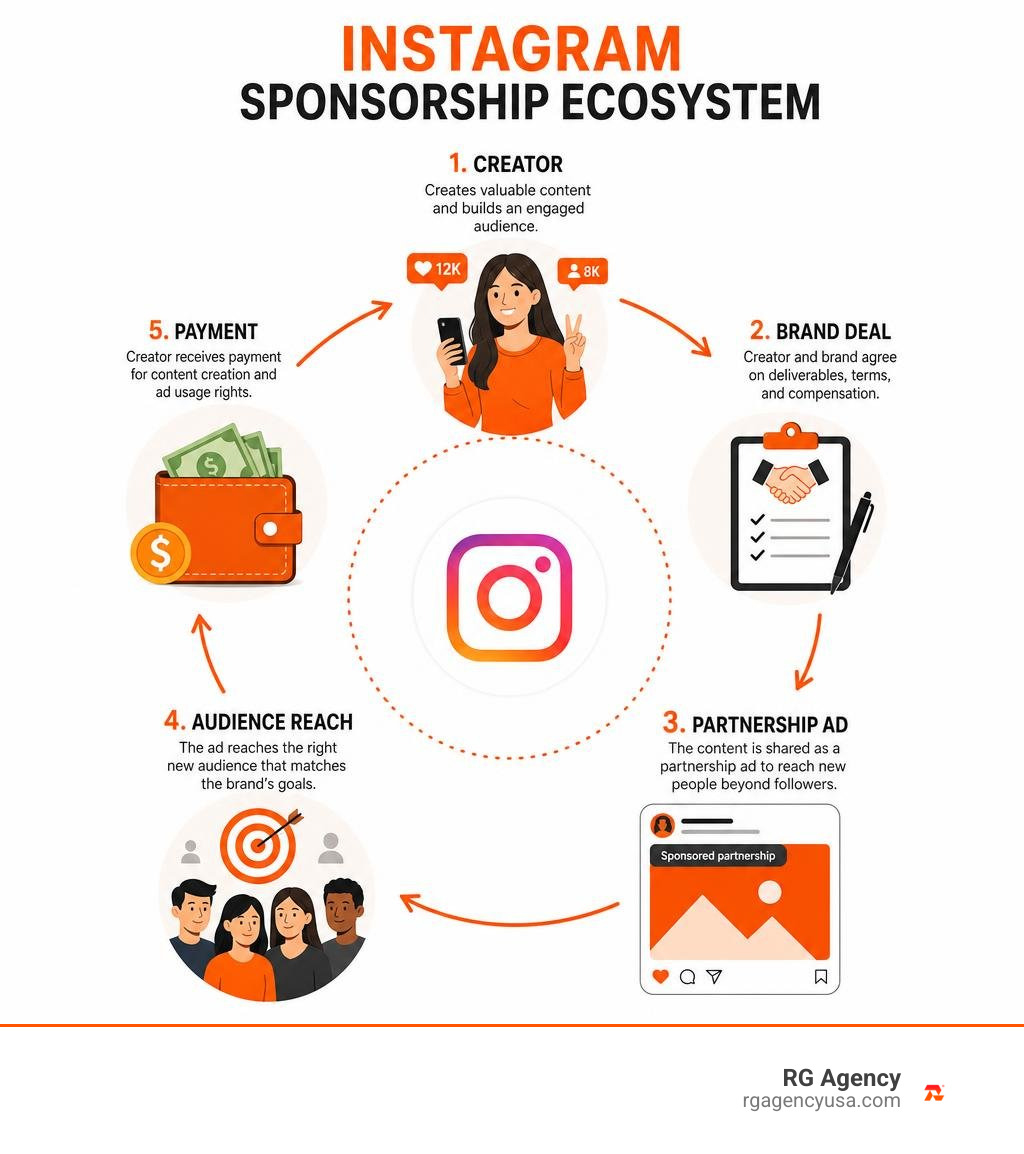
To get paid to advertise on Instagram, build a clear creator profile, prove that your audience engages with your content, and pitch brands a paid collaboration that includes content creation plus partnership-ad usage rights. This lets a brand run your post as an ad to audiences beyond your followers, while you charge for both your creative work and the paid use of it.
A simple path to your first deal:
- Switch to a professional Creator account and make your niche obvious.
- Track your reach, engagement, audience demographics, and top-performing Reels.
- Contact brands that already fit your audience and offer a specific deliverable.
- Ask whether they want to use the content as a partnership ad, then set a separate fee and clear usage period.
- Use Instagram’s Paid Partnership label for any paid, gifted, or otherwise compensated collaboration.
This matters because creator recommendations influence shopping decisions: 40% of Instagram users look to creators for recommendations when they shop. A strong sponsorship is not just a post for your existing followers. It is trusted, creator-led content that a brand can use to reach the right new customers.
I am Roger Aguiar, Owner and CEO of RG Agency in Austin, Texas, where I have helped businesses use SEO, PPC, paid social, and data-driven campaigns to generate measurable results. In this guide, I will show you how to get paid to advertise on Instagram while protecting your creative control and making each brand deal more valuable.
Understanding Instagram Ad Monetization: Partnership Ads vs Sponsored Posts
For years, getting sponsored on Instagram meant publishing a photo or Reel to your personal feed, adding a brand tag, and hoping the algorithm favored your post for 48 hours. Today, modern creators leverage Meta’s ad ecosystem to drive long-term value. Understanding the mechanical differences between traditional sponsored posts, boosted content, and Meta partnership ads is essential to monetizing your content effectively.
| Feature | Standard Organic Sponsored Post | Boosted Organic Post | Meta Partnership Ad |
|---|---|---|---|
| Primary Placement | Creator’s profile feed & followers’ feeds | Creator’s profile feed & targeted feeds | Feeds, Stories, Reels, Explore across Instagram & Facebook |
| Identity Header | Creator handle with “Paid partnership with brand_name” | Creator handle with “Sponsored” tag | Dual-handle: displays both Creator and Brand handles |
| Targeting Control | Organic algorithm only (existing followers) | Basic in-app audience targeting | Full Meta Ads Manager targeting (Lookalikes, Custom, Retargeting) |
| Call-to-Action (CTA) | Link in bio or basic Story link sticker | Basic clickable button | Custom clickable CTA buttons (e.g., “Shop Now”, “Sign Up”) |
| Revenue Potential | Base content creation fee only | Base fee + minimal boost fee | Base fee + Extended Ad Usage Rights + Performance Bonuses |
| Grid Requirement | Must be published directly to creator’s feed | Must exist as an organic post on creator’s feed | Can be an organic post OR a dark ad (does not appear on your grid) |
According to official guidelines on how to partner with brands and earn on Instagram, partnership ads allow a business to amplify creator-generated assets directly through Meta Ads Manager. This hybrid format combines the authentic visual tone of native creator content with the robust distribution capabilities of direct-response advertising.
Paid Partnership Labels vs Partnership Ads vs Testimonials
Navigating disclosure rules and ad formats requires clarity on three core terms:
- Paid Partnership Label: A native transparency tool applied to organic posts, Stories, and Reels. Required by platform policy and FTC regulations whenever value (monetary payment, free trips, gifted products) is exchanged.
- Partnership Ad: A paid advertising unit created inside Meta Ads Manager using content linked to both the creator and the brand. It features dual handles at the top of the post and incorporates custom destination buttons.
- Testimonial Ad: A specialized, low-friction partnership ad format where a creator submits a concise, text-only product endorsement (typically 125 characters or fewer). The brand pairs this authentic quote with their own product creative, creating an efficient monetization channel that requires no custom video filming on your end.
Three Ways to Monetize Content: Original Assets, Existing Posts, and Quick Testimonials
Creators can establish three distinct workflows to monetize their creative assets:
- Original Bespoke Creative: You produce dedicated Reels, carousels, or vertical videos explicitly designed for a brand’s upcoming paid campaign. You build the creative around a designated hook, submit it for brand approval, and provide ad-code permissions prior to publication.
- Monetizing Existing High-Performing Posts: When an unsponsored organic post organically gains significant traction, you can offer the brand usage rights retroactively. The brand attaches ad spend behind your proven asset, extending its reach while you capture an additional licensing fee.
- Quick Testimonials: You provide short, punchy quotes endorsing a product you genuinely use. The partner brand integrates your handle and quote into their catalog or lifestyle ads, providing you with quick compensation without extensive production time.
How Creators Get Paid to Advertise on Instagram in 2026
Modern brand compensation models factor in both content production and targeted distribution value. In recent advertising benchmarks, the average cost per click (CPC) for Instagram ads hovered around $1.31, with an average cost per thousand impressions (CPM) of $15.26. For targeted US audiences, CPM benchmarks reached $16.25 and CPC averaged $1.39.
Because brands spend between $0.12 (for top-of-funnel traffic campaigns) to over $40.00+ CPM for competitive conversion campaigns, high-converting creator creative saves them substantial ad spend. At RG Agency, our social media advertising services demonstrate that creator-led partnership ads consistently outperform standard studio creative in click-through rates and customer acquisition costs.
Follower Counts and Rates: What You Get Paid to Advertise on Instagram
Creator payout models generally scale according to audience size, content quality, and market engagement. Industry data from comprehensive guides on how to get paid on Instagram reveals that baseline pricing typically ranges from $10 to $100 per 1,000 followers for standard organic posts, with partnership ad rights adding a 30% to 100%+ premium:
- Nano-Creators (1,000 – 10,000 followers): $50 – $300 per post. Nano-creators often secure partnerships based on niche authority and high community engagement rates (frequently above 5–8%).
- Micro-Creators (10,000 – 50,000 followers): $300 – $1,500 per post. This tier represents the sweet spot for direct-to-consumer brands seeking cost-effective user-generated content and authentic audience trust.
- Mid-Tier Creators (50,000 – 200,000 followers): $1,500 – $5,000 per post. These creators offer established reach, consistent video view counts, and professional-grade production capabilities.
- Macro & Mega Creators (200,000+ followers): $5,000 – $20,000+ per collaboration, scaling upward based on celebrity status, exclusivity terms, and broad multi-channel distribution rights.
Core Pricing Factors: Engagement, Niche, and High-ROI Ad Formats
Your follower count establishes your baseline baseline, but several secondary variables determine your final payout rate:
- Audience Niche Valuation: High-ticket niches such as B2B software, personal finance, real estate, health, and specialized tech command significantly higher CPMs than general lifestyle or meme entertainment.
- Verified Engagement Rate: An account with 15,000 followers and an 8% engagement rate regularly commands higher fees than an inactive account with 80,000 followers. Brands analyze saves, shares, and comment depth over passive likes. Learning how to be found on social media through search-optimized captions and keyword-rich bios ensures consistent organic discoverability that brands value.
- Ad Placement Formats: Format selection directly influences brand ROI. Story ads represent approximately 41% of all Instagram ad impressions, Feed placements capture 29%, and Reels ads generate 26%. Because full-screen vertical Reels deliver immersive experiences, video assets command the highest production and licensing fees.
Step-by-Step Guide to Pitching Brands and Closing Paid Deals
Landing consistent brand sponsorships requires an intentional, business-to-business outreach strategy.

Step 1: Optimize Your Profile and Join the Instagram Creator Marketplace
Before reaching out to brand marketing directors, configure your profile for discovery:
- Navigate to your account settings and convert your profile to a Creator Account.
- Open your Professional Dashboard and complete onboarding for the Instagram Creator Marketplace.
- Specify your primary content categories, brand affinity preferences, and demographic highlights.
- Curate a clean bio stating your niche, primary market location (e.g., Austin, Dallas, Houston, San Antonio, or Georgetown), and a dedicated business contact email address.
The Creator Marketplace functions as an integrated discovery engine where brand media buyers search for verified creator profiles based on audience location, age distributions, and average Reel plays.
Step 2: Build a Data-Backed Media Kit and Audience Persona
Brands invest in measurable outcomes, not vanity metrics. Construct a two-page media kit that showcases clear analytics. If you need inspiration on structuring performance data, reviewing professional social media management services can help you understand the core performance indicators brands prioritize.
Your media kit should include:
- Audience Demographics: Top countries, top cities, gender splits, and primary age brackets.
- Engagement Benchmarks: Average Reel retention rates, 30-day reach, average Story views, and click-through metrics on past link stickers.
- Visual Case Studies: Screenshots showing how past content solved problems for previous sponsors, highlighting metrics such as comment sentiment, link clicks, or promo code redemptions.
Step 3: Pitch Partnership Ads to Increase Deal Value
When reaching out to brand managers, structure your proposal around paid partnership permissions rather than basic organic distribution. Meta’s official resources on earning more with partnership ads show that offering paid usage rights enables creators to negotiate larger deals because the brand is buying creative licensing and ad utility, not just temporary feed placement.
Use this practical email framework for brand outreach:
Subject: Partnership Proposal: Apex Athletics x Alex Rivera
Hi Sarah,
I love how Apex Athletics approached your recent activewear launch. My audience of 25,000 Austin-based fitness enthusiasts actively looks to my channel for actionable recommendations on functional workout gear and athletic routines.
Over the last 90 days, my Reels have maintained an average engagement rate of 5.8% with over 18,000 plays per video.
Rather than a standard organic post that disappears from the feed in 48 hours, I want to produce two high-converting Reels optimized for Meta Partnership Ads. This allows your marketing team to amplify the content directly through Meta Ads Manager to your exact target demographics using our dual-handle branding.
I have attached my media kit with full demographic data and performance case studies. Are you open to a 10-minute call this Thursday to discuss concepts for your upcoming product launch?
Best regards,
Alex Rivera
instagram.com/alexriverafit | portfolio.alexrivera.com
Content Guidelines, Ad Permissions, and Retaining Creative Control
Monetizing your channel successfully requires protecting your reputation and your profile’s security throughout the campaign lifecycle.
Technical Eligibility and Meta Music Library Compliance
Paid partnership ads must meet specific technical standards inside Meta Ads Manager to run without ad rejection:
- Audio Licensing Rules: You cannot use commercial, copyrighted music tracks in posts intended for partnership ads. Even if an audio clip is trending organically, commercial ad accounts lack distribution licenses for copyrighted music. Always utilize original recorded voiceovers, royalty-free audio tracks, or sounds selected directly from the Meta Sound Collection.
- Visual Dimensions: Produce all video assets in a 9:16 vertical ratio (1080 x 1920 pixels). Keep crucial visual elements and calls-to-action out of the top and bottom 20% of the screen to avoid obstruction by profile handles, captions, and platform interface buttons.
- Sound-Off Optimization: With over 50% of Instagram users scrolling with the sound turned off, include dynamic on-screen captions and visual cues to ensure your hook and value proposition register without audio.
Managing Ad Permissions, Usage Rights, and Contract Terms
When granting ad access, never share direct login credentials, passwords, or full administrative control of your Facebook Page or Instagram profile. Professional workflows use tokenized ad codes or native partner permissions:
- Ad Code Generation: Inside your advanced post settings, toggle on “Allow brand partner to boost.” Instagram generates a unique Partnership Ad Code that you share with the brand media buyer, allowing them to import your post into their Ads Manager without granting account-level administrative access.
- Usage Term Limits: Define exact runtime parameters in your written agreements. Standard usage licensing covers 30, 60, or 90 days. If the brand wishes to continue running your creative as a paid ad past the agreed window, your contract should specify an ongoing monthly licensing fee.
- Exclusivity Restrictions: If a brand requests that you refrain from partnering with direct competitors during a campaign, establish clear limits on that exclusivity. Narrow the scope to direct product categories (e.g., “energy drink brands” rather than “all beverage companies”) and charge an additional exclusivity premium.
Consulting a structured social media manager guide can help you navigate contract clauses, usage rights, and standard client communication protocols.
Frequently Asked Questions about Instagram Sponsorships
How many followers do you need to start getting paid sponsorships?
You can secure paid brand partnerships with as few as 1,000 highly engaged followers. Direct-to-consumer and local businesses frequently partner with nano-creators who demonstrate strong community trust, high comment activity, and specialized niche authority. Brands value high-quality content creation; even if your organic audience is small, companies will pay for the right to run your videos as partnership ads.
Can any organic post be turned into a paid partnership ad?
Most organic feed posts, Reels, carousels, and Stories can be converted into partnership ads provided they follow commercial compliance rules. The asset must not contain copyrighted music, third-party intellectual property, or prohibited content categories. The creator must also enable ad partnership permissions within the individual post’s advanced settings.
Will partnership ads appear directly on my Instagram grid?
Not necessarily. If you select an existing organic post from your profile and grant boosting permissions, that post remains on your public grid while receiving paid amplification. However, if you create a “dark” partnership ad, the brand uploads your approved video directly into Meta Ads Manager. The ad then runs across targeted user feeds with your handle displayed at the top, without appearing on your public profile grid.
Conclusion
Monetizing your Instagram account in 2026 is no longer limited to basic sponsored posts and fluctuating organic algorithms. By pairing authentic content creation with Meta partnership ad usage rights, you transform your channel from a simple promotional billboard into a scalable customer acquisition asset for brands. Treat your creative output like a business: package your performance data, pitch measurable advertising solutions, and set clear contractual boundaries around your usage rights.
Whether you are an independent creator building a sponsorship portfolio or a brand seeking to optimize performance marketing across Texas and beyond, building data-driven ad campaigns is the most reliable way to secure sustainable returns. Discover how our full-service team at RG Agency plans, builds, and executes integrated multi-channel marketing campaigns that drive measurable ROI.