Introduction
The best ecommerce SEO company combines catalog architecture expertise, faceted navigation optimization, and commercial revenue tracking to turn organic search visibility into scalable online store sales. These specialized teams focus on indexation for dynamic product inventories and high-intent keyword mapping rather than generic landing pages. This systematic approach ensures that when shoppers execute commercial queries, your store captures demand precisely at the moment buyers are ready to purchase.
Organic search drives 53.3% of all website traffic, solidifying its role as the undisputed backbone of online retail discovery. For modern merchants, visibility is not merely about brand vanity; it is about commercial viability. First-page results capture over 71% of all search clicks, with the top three organic listings claiming more than half of that volume. Furthermore, 75% of prospective customers never scroll past page one.
When you capture these high-intent buyers as they execute commercial search queries, the financial payoff is substantial: inbound SEO leads maintain an average close rate of 14.6%, drastically outperforming traditional outbound channels that linger around 1.7%. This aligns with broader search engine optimization principles that prioritize relevance and user experience.
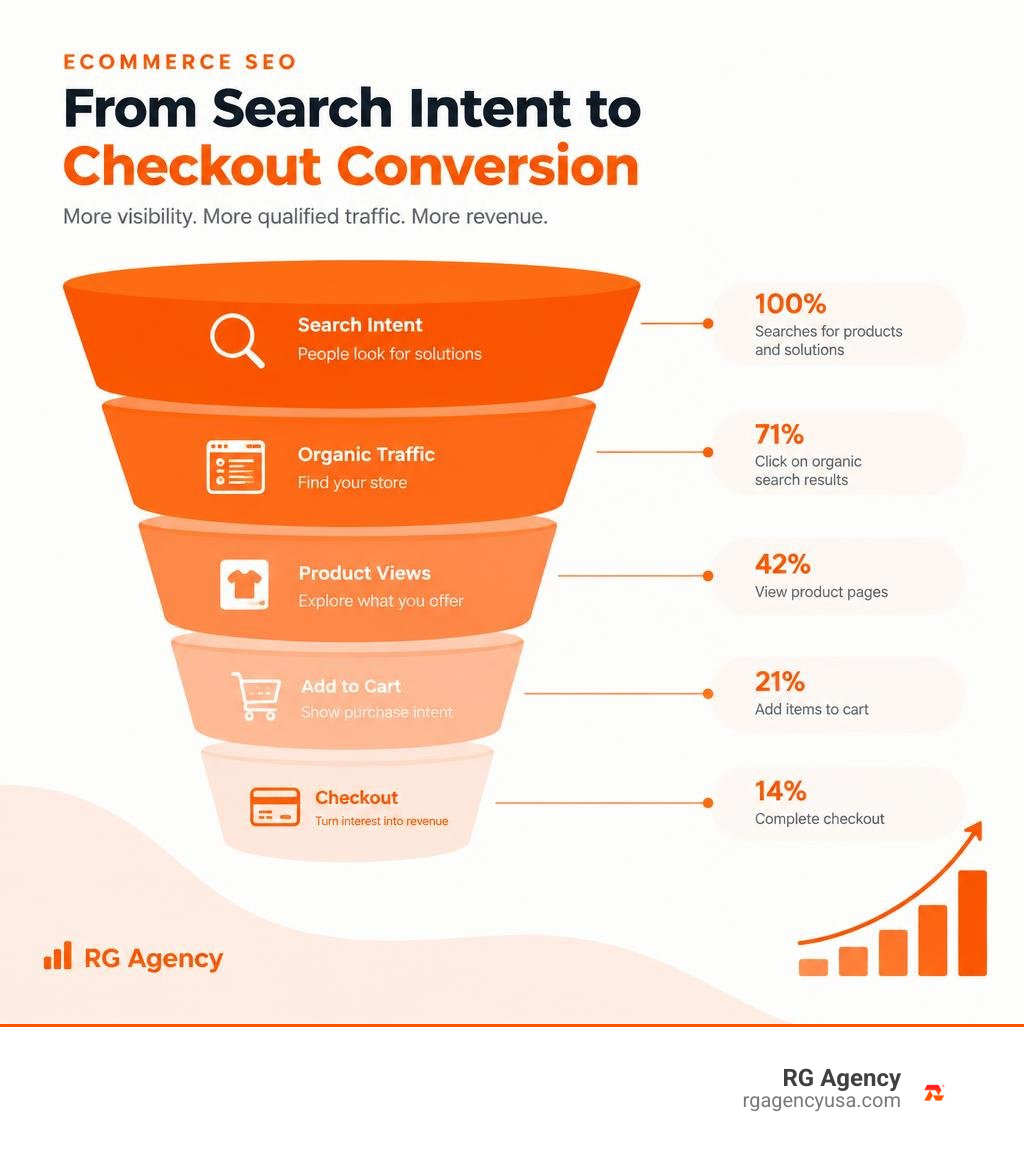
Connecting search behavior directly to checkout events requires a systematic strategy. Below, we break down how specialized agencies turn organic search traffic into sustainable revenue engines.
Key Capabilities of the Best eCommerce SEO Company
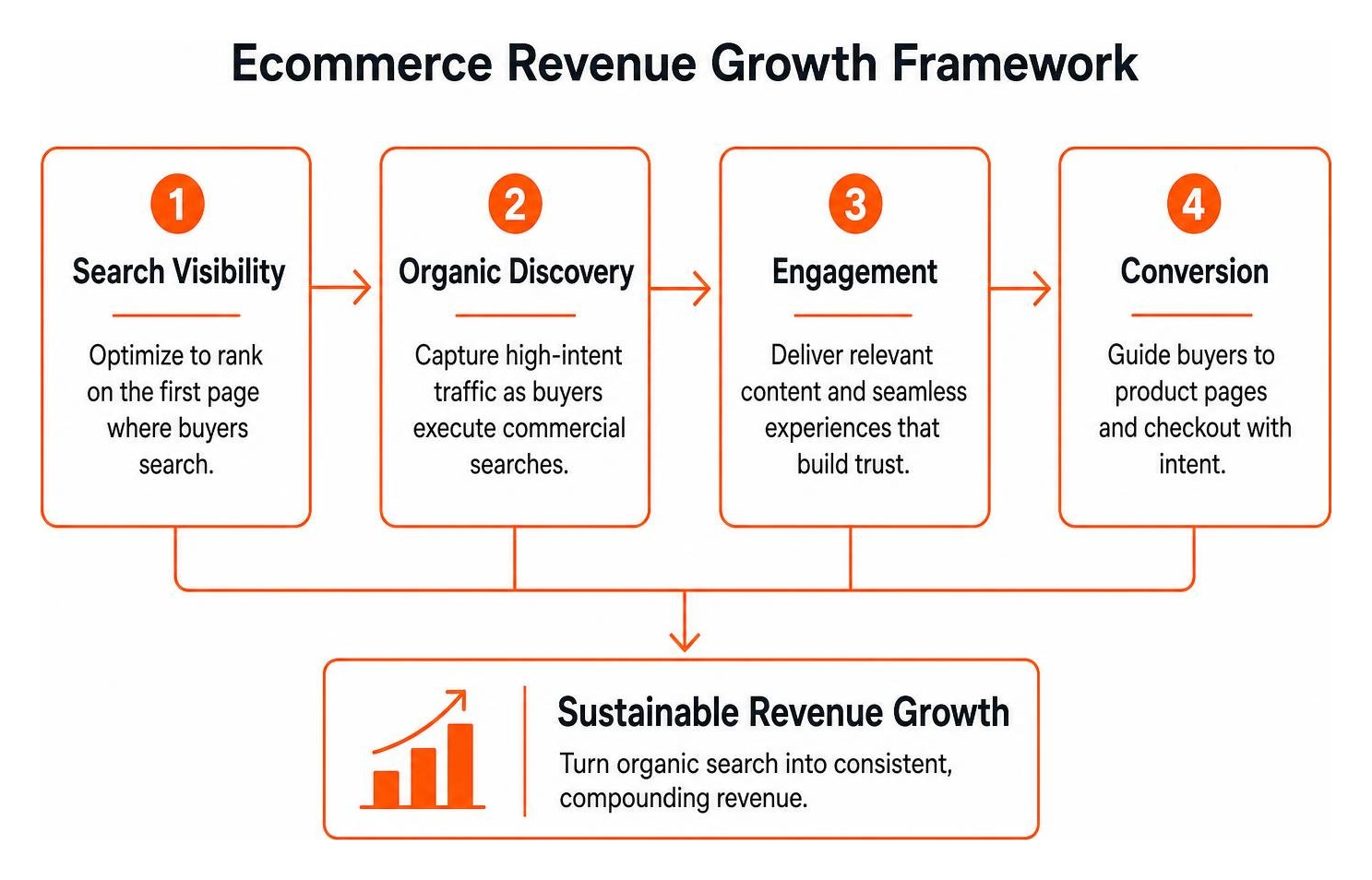
Managing search visibility for an online storefront requires engineering, commercial empathy, and continuous data refinement. Unlike standard informational websites, online storefronts feature dynamic inventories, intricate multi-tier navigation, and fluctuating stock statuses. A top-tier agency focuses on growing high-converting organic traffic by designing structures that search engine crawlers can index without getting trapped in infinite filtering loops.
Specialized Services Provided by the Best eCommerce SEO Company
A specialized search firm delivers solutions tailored directly to retail mechanics:
- Catalog Architecture & Hierarchy Design: Organizing categories, subcategories, and individual SKUs into an intuitive crawl taxonomy.
- Commercial Intent Keyword Mapping: Executing in-depth ecommerce keyword research to map high-intent queries to matching product collections rather than broad, low-converting terms.
- Structured Data & Rich Snippets: Implementing JSON-LD structured data via Schema.org for product pricing, live inventory status, aggregated star ratings, and shipping parameters.
- Revenue & Attribution Tracking: Utilizing advanced analytics frameworks to measure organic performance via metrics like Average Order Value (AOV), Customer Acquisition Cost (CAC), and organic Return on Ad Spend (ROAS).
- Integrated Multi-Channel Execution: Pairing organic strategies with dedicated search engine optimization services to ensure steady catalog indexing.
Differences Between General Agency Work and eCommerce SEO Specialists
General digital marketing agencies often treat every website like a collection of standard landing pages and informational articles. In contrast, retail search specialists understand that managing 50,000 active SKU pages presents unique challenges that do not exist for local service companies or standard lead-generation websites:
- Crawl Budget Management: Ensuring Googlebot spends resources crawling high-margin, in-stock products rather than millions of non-indexable filter parameter URLs.
- Faceted Navigation Optimization: Controlling URL parameters dynamically to prevent index bloat and duplicate page rendering.
- Inventory Turnover Protocols: Managing seasonal stock, out-of-stock items, and discontinued products cleanly to preserve accumulated page authority.
- Canonical Hierarchy Execution: Defining indexable master URLs across variations in size, color, material, and bundle packaging.
Technical and On-Page Frameworks That Drive Online Store Revenue

Search engines prioritize fast, mobile-optimized shopping experiences. With mobile commerce generating 72.9% of global ecommerce sales, mobile-first indexing is fundamental to store visibility. Furthermore, stores that achieve page load times under two seconds see a 9% higher conversion rate. Meeting Core Web Vitals targets protects search rankings while immediately lowering bounce rates.
| Initiative Type | Core Optimizations | Primary Revenue Impact |
|---|---|---|
| Technical SEO Fixes | Server response time, image payload optimization, JavaScript hydration, faceted URL parameter controls | Increases crawl efficiency, indexing coverage, mobile page retention, and checkout completion rates |
| On-Page & Content Updates | Schema markup, unique product descriptions, category buying guides, FAQ sections, optimized title templates | Elevates click-through rates (CTR) on SERPs, long-tail keyword reach, and buyer purchase intent |
Solving Catalog Challenges: Duplicate and Thin Content
Retail catalogs frequently suffer from duplicate text, manufacturer descriptions, and thin variant pages. Resolving these challenges requires methodical technical SEO execution:
- Parameter URL Control: Configuring canonical tags to point color and size variant URLs back to the primary canonical product page.
- Automated Metadata Templating: Setting programmatic meta titles and descriptions across thousands of SKUs to maintain consistency without manual overhead.
- Handling Discontinued Inventory: Implementing 301 redirects to the closest parent category or updated product version when items are permanently retired, keeping internal page equity intact.
- Robots Directive Customization: Blocking internal search result pages, checkout paths, and customer account portals via
robots.txtdirectives.
Optimizing High-Converting Category and Product Pages
Category pages act as the primary landing hubs for competitive, high-volume search queries, while individual product pages capture ready-to-buy shoppers. Product pages that use optimized title tags and compelling meta descriptions achieve a 30% higher click-through rate in organic search results.
Long-tail keywords containing three or more words account for 70% of all web searches and yield a 36% higher conversion rate in retail search. We integrate these conversational phrases into category introductory copy, FAQ sections, and customer review modules through structured on-page SEO optimization frameworks.
Strategic Authority Building and Seasonal Search Optimization

A functional technical foundation must be supported by off-page trust and fresh topical relevance. Sixty-one percent of professional marketers recognize organic visibility as their top inbound marketing priority, yet many struggle to build authoritative links to commercial product listings.
High-Impact Link Building and Content Marketing for Stores
Directing external links straight to individual product pages is challenging because external publications rarely link to checkout pages naturally. Overcoming this requires building informational hub assets that capture links and distribute page authority across the store catalog:
- Buying Guides and Product Roundups: Developing comprehensive shopping guides, comparison charts, and problem-solving content that naturally earn links from lifestyle, tech, and industry publications.
- Digital PR & Data Studies: Surveying consumer trends to generate unique reports that earn unlinked brand mentions and high-authority contextual links from news outlets.
- Targeted Outreach Campaigns: Securing relevant editorial placements via strategic backlink acquisition strategies that channel authority back into core commercial category pages.
- Content Hub Architecture: Stores that maintain an active blog produce 434% more indexed pages and capture 97% more inbound links, creating an internal link pipeline that lifts commercial product rankings.
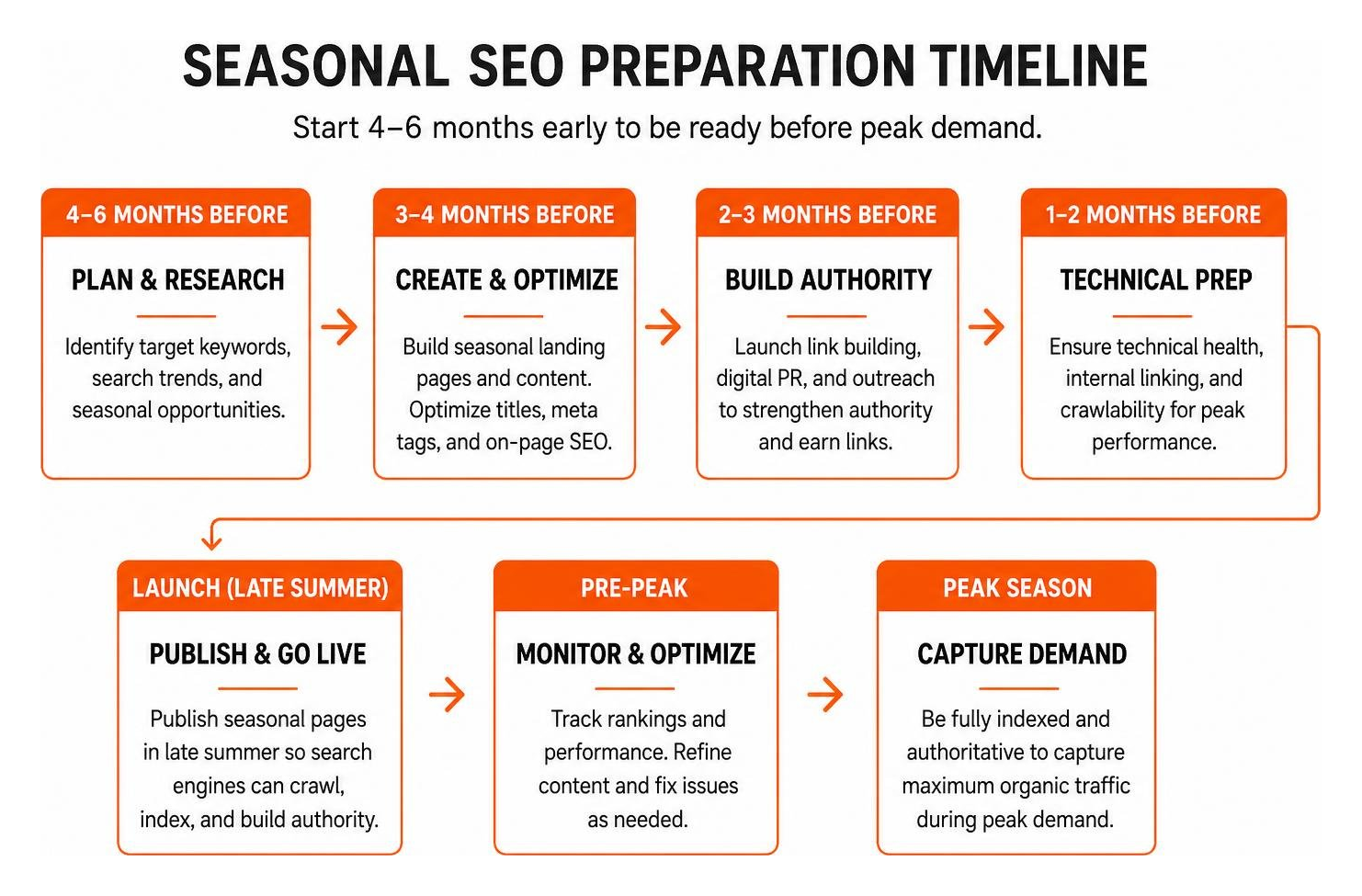
Preparing for high-volume sales windows—such as Q4 holiday rushes, Cyber Week, or seasonal transitions—requires initiating organic search strategies at least four to six months in advance. Because search engine algorithms require time to crawl, index, and recalculate link equity, launching seasonal landing pages in late summer ensures full topical authority before consumer demand peaks.
How to Evaluate and Choose an eCommerce Search Agency
Choosing the right digital agency requires looking past vanity metrics like raw impressions. An effective partner ties operational activity directly to clear financial metrics:
- Organic Revenue Attribution: Clear tracking linking organic search sessions directly to finalized multi-touch sales.
- Average Order Value (AOV) Growth: Monitoring whether organic search visitors are buying higher-tier products or larger order bundles.
- Blended Customer Lifetime Value (LTV): Assessing the repeat purchase patterns of search-acquired customers compared to paid channels.
Core Criteria to Select the Best eCommerce SEO Company for Your Brand
When looking for the best ecommerce seo company for your business, evaluate candidate agencies on their technical depth and platform experience. Review their published track records across popular ecommerce platforms, such as Shopify, Adobe Commerce (Magento), BigCommerce, and custom headless CMS environments.
Before committing your marketing budget, review these essential considerations before hiring a company for SEO to ensure their reporting style and strategic roadmap fit your store’s operational model.
Common Pitfalls and Red Flags When Hiring SEO Providers
Avoid firms that display these warning signs during initial strategy consultations:
- Guaranteed #1 Rankings: Search algorithms are dynamic; no agency can guarantee specific keyword positions.
- Opaque Work Reports: Retainers that fail to specify the exact technical tickets, content briefs, or link placements delivered each month.
- Automated Private Blog Networks (PBNs): Low-quality, bulk link-building networks that violate search engine quality guidelines and risk manual penalties.
- Siloed Execution: Treating SEO as an isolated task disconnected from conversion rate optimization, inventory management, and digital advertising channels.
Frequently Asked Questions About eCommerce SEO
How long does it take for ecommerce SEO to generate revenue?
Organic search campaigns typically reach an inflection point between 3 and 6 months. Initial technical crawl fixes, schema implementation, and category optimizations often generate early ranking improvements within 60 to 90 days, with compounded organic revenue expansion materializing across months 6 through 12.
How do ecommerce SEO agencies manage out-of-stock or discontinued products?
Temporarily out-of-stock items remain live with visible schema adjustments indicating the current inventory status, preventing 404 crawl errors. Permanently discontinued products are evaluated based on their backlink profiles and user demand; valuable URLs are permanently redirected (via 301 redirects) to their direct successor product or relevant parent collection.
What ecommerce platforms are most search engine friendly?
Modern platforms like Shopify, BigCommerce, and WooCommerce provide solid native foundations for indexation and speed. However, enterprise configurations often leverage headless commerce frameworks, pairing custom front-end systems with powerful catalog APIs to maximize technical performance and Core Web Vitals metrics.
Conclusion
Sustained ecommerce expansion requires bridging technical execution, commercial on-page refinement, and authority building. Achieving sustainable, profitable organic scale means moving beyond isolated ranking tactics to focus on direct revenue, inventory efficiency, and cohesive omnichannel growth.
At RG Agency, our Austin, Texas team deploys a data-driven 4-step framework uniting search engine optimization, paid media channels, and conversion architecture to turn visibility into store revenue.
Scale your online store traffic and build lasting organic market share with RG Agency.