
Why Automated Professional Marketing Saves Time and Creates Better Leads
Automated professional marketing uses software, customer data, and predefined triggers to run repeatable campaigns without making your team do every task by hand. Start by choosing one high-value workflow – such as a new-lead welcome series, abandoned-cart reminder, or appointment follow-up – then connect it to your CRM, segment the audience, and measure leads and sales it produces.
This is not about sending more generic messages. It is about sending the right message when a customer takes a meaningful action. A visitor downloads a guide, for example, and receives helpful follow-up content. A shopper leaves an item in their cart and gets a timely reminder. Your team gets more time for strategy, creative work, and real customer conversations.
That relevance matters: 80% of customers are more likely to buy from brands that provide customized experiences. Automation can also unify email, landing pages, social activity, and lead handoffs so your marketing is easier to manage and easier to measure.
I am Roger Aguiar, Owner and CEO of RG Agency, a full-service digital marketing agency in Austin, Texas. Since founding RG Agency in 2019, I have helped businesses use automated professional marketing across SEO, paid media, websites, and automation to turn scattered activity into measurable traffic, leads, and sales.
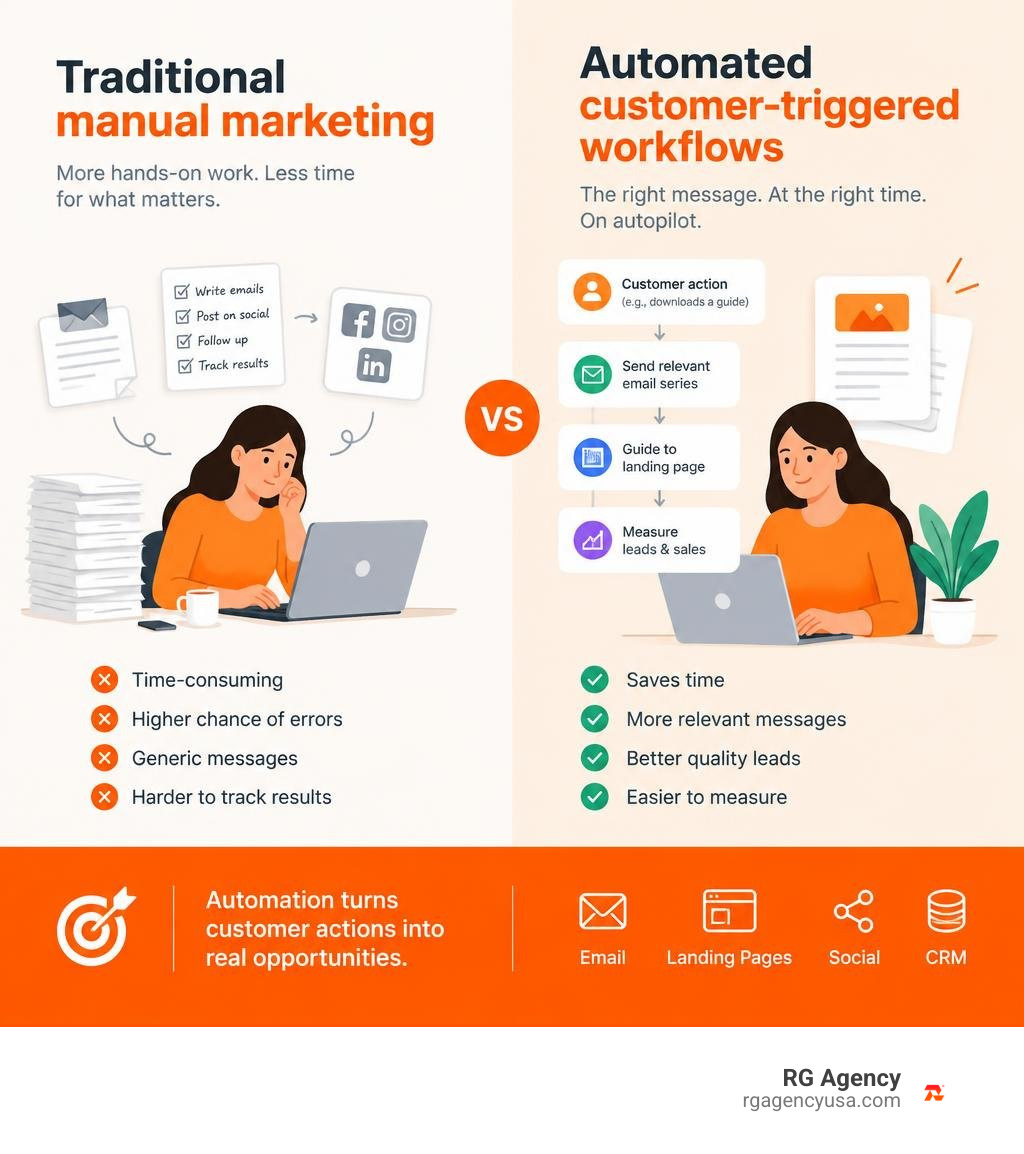
Automated professional marketing terms at a glance:
Understanding Automated Professional Marketing: Definition and Core Mechanics
Marketing automation combines purpose-built software, behavioral data, and strategic logic to plan, launch, and optimize cross-channel campaigns automatically. Instead of forcing your team to manually blast one-off emails or copy-paste lead contact details into spreadsheets, automation software operates quietly in the background 24/7.
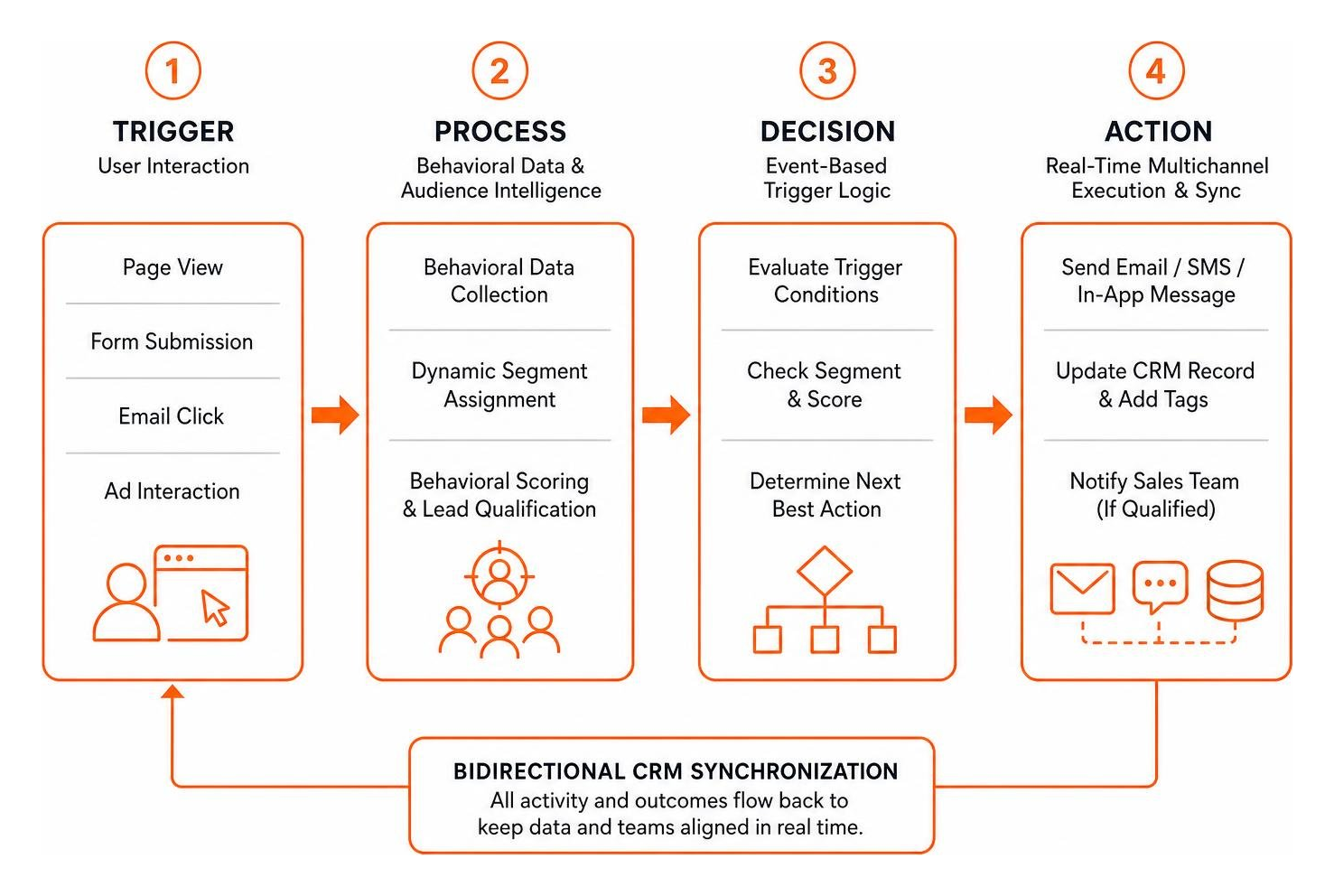
The engine relies on four core mechanics working in harmony:
- Behavioral Data Collection: Tracking customer interactions across your website, emails, ads, and digital touchpoints in real time.
- Dynamic Audience Segmentation: Organizing contacts automatically based on demographics, purchase history, content engagement, or lifecycle stage.
- Event-Based Triggers: Executing actions (such as sending an SMS, tagging a record, or notifying a sales rep) the moment a user completes a specific behavior.
- Bidirectional CRM Synchronization: Ensuring marketing activity instantly updates your central database so sales teams always see complete prospect context.
| Feature Area | Traditional Manual Marketing | Modern Marketing Automation |
|---|---|---|
| Execution | Manual batch-and-blast campaigns | Event-driven, individualized triggers |
| Personalization | Static text with basic mail merges | Dynamic content adapted to behavior and intent |
| Data Flow | Disconnected tools and manual exports | Real-time, continuous CRM synchronization |
| Lead Qualification | Reps manually review and guess readiness | Automated behavioral scoring models |
| Optimization | Reactive, periodic post-campaign reviews | Continuous A/B testing and algorithmic tuning |
Implementing AI-powered marketing automation workflows eliminates repetitive busywork and guarantees that no lead slips through operational cracks.
The Evolution from Static Execution to AI-Driven Workflows
Early marketing automation was rigid. If a prospect clicked “Link A,” the system sent “Email B” three days later. If their behavior didn’t fit that exact path, the experience stalled.
Today, generative AI prompts, predictive analytics, and real-time sentiment analysis have transformed static sequences into adaptive, responsive journeys. Modern systems evaluate user intent in seconds, dynamically rewriting subject lines, recommending hyper-targeted content assets, and orchestrating touchpoints based on predicted conversion probability.
Furthermore, dynamic engagement tools such as Automagical – AI Social Media That Feels Like Magic enable brands to react to local trends, weather shifts, and community discussions automatically. Pairing intelligent content tools with modern conversational lead capture systems creates responsive marketing ecosystems that feel personal and immediate.
Impact on the Customer Journey: Nurturing Leads and Boosting Conversions
Buyers rarely convert on their very first interaction. They research, compare options, step away, and return across multiple channels. Marketing automation bridges these gaps by delivering tailored messaging aligned with each stage of the buyer journey.
Research reveals that marketers report a 451% increase in qualified leads when leveraging automated nurture workflows. Furthermore, 78% of consumers state that personalized interactions make them significantly more likely to purchase from a brand again.

Deploying comprehensive lead generation strategies ensures every stage of the funnel is accounted for:
- Awareness Stage: Welcome sequences introduce your brand values, establish credibility, and deliver requested resources instantly.
- Consideration Stage: Triggered case studies, comparison guides, and educational webinars address friction points based on the specific pages a prospect visits.
- Decision Stage: Automated demo requests, custom discount triggers, and direct calendar integrations make purchasing seamless.
How Automated Professional Marketing Drives Scalable Lead Generation
Scalable lead generation requires precision handoffs between marketing and sales. Automated lead scoring assigns point values based on explicit data (job title, company size) and implicit actions (visiting pricing pages, opening product emails).
When a lead reaches your qualification threshold, the platform executes a data enrichment lookup, updates the CRM record, and alerts the appropriate account executive. This structured efficiency forms the foundation of predictable B2B lead generation funnels, cutting sales handoff delays by over 30% and accelerating deal velocity.
Lifecycle Nurturing and Customer Retention
The customer relationship expands after the initial sale. Retaining existing clients costs significantly less than acquiring new ones, making post-purchase automation essential for long-term profitability.
High-impact retention workflows include:
- Onboarding Drips: Guiding new clients through platform setup or service expectations to secure early adoption.
- Dynamic Abandoned Cart Sequences: Triggering SMS or email reminders tailored to the exact products left behind.
- Milestone & Anniversary Triggers: Celebrating customer milestones, contract renewals, or birthdays with exclusive incentives.
- Proactive Churn Mitigation: Detecting drops in user activity and automatically triggering check-ins or helpful support documentation.
Refining your automated email marketing campaigns guarantees sustained engagement without demanding constant manual oversight from your staff.
Navigating the Automation Tech Stack: Platform Types and Evaluation
The global marketing automation industry generates over $8 billion annually and is on track to surpass $14 billion by 2030. Email marketing (71%), social media management (39%), and landing pages (35%) represent the primary channels where businesses deploy automation tools today.

When evaluating marketing automation software solutions, assess platforms against four essential criteria:
- Use-Case Alignment: Ensure the tool excels in your primary focus—whether that means B2B lead nurturing, complex API webhook routing, or high-volume ecommerce transactions.
- Ease of Use: Choose intuitive, no-code visual workflow builders that your team can manage without relying on software engineers for simple logic adjustments.
- Data Security & Governance: Confirm adherence to SOC-2, GDPR, and regional privacy frameworks to safeguard customer records.
- Integration Ecosystem: Ensure deep, native connections to your CRM, ad platforms, analytics stacks, and backend billing software.
Channel-Specific Tool Capabilities
A robust tech stack unites disparate marketing channels into a single, cohesive workflow engine:
- Paid Media Automation: Automatically syncing dynamic custom audiences with Google and Meta ad platforms based on lifecycle changes.
- Social Publishing & Listening: Scheduling calendar queues while actively monitoring brand sentiment and keyword triggers.
- Landing Page Personalization: Dynamically swapping page headlines, imagery, and call-to-action buttons based on referring ad campaigns or industry vertical tags.
Unifying these assets creates integrated digital marketing channels that provide consistent brand touchpoints across every digital environment.
Careers and Salary Trends in Marketing Automation for 2026
As organizations expand their digital capabilities, demand for skilled automation professionals continues to surge. Companies increasingly seek talent capable of combining creative marketing strategy with technical database architecture.
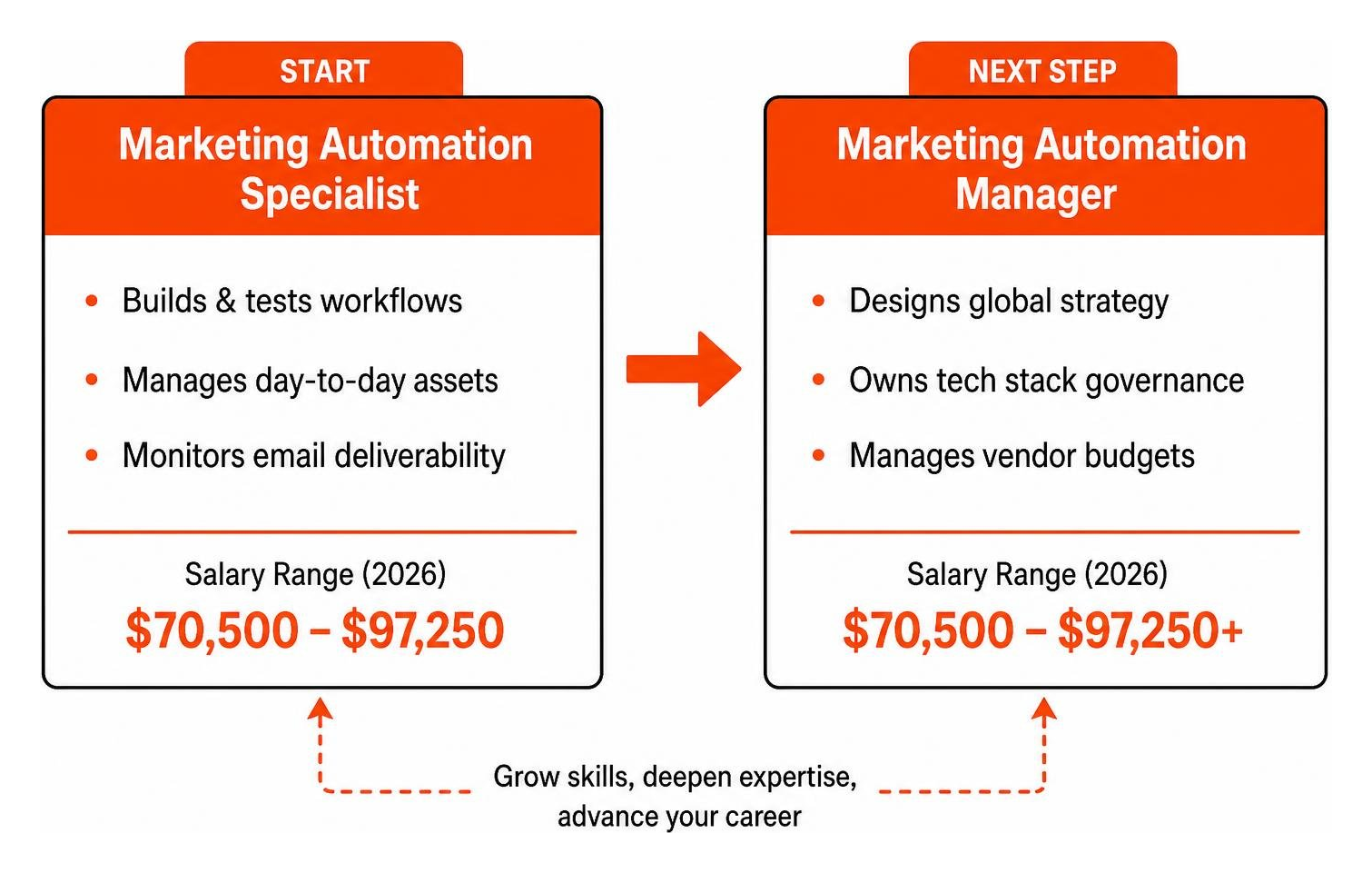
In 2026, the standard salary range for a Marketing Automation Specialist falls between $70,500 and $97,250, with senior managers and technical CRM architects earning well into six figures depending on technical proficiency.
Many professionals accelerate their career trajectory and deepen their strategic communication expertise through advanced academic programs like the Master’s in Integrated Marketing Communications.
Essential Skills for an Automated Professional Marketing Career
Building a resilient career in this discipline requires a balanced blend of technical, analytical, and strategic capabilities:
- CRM Administration & Data Architecture: Structuring custom objects, maintaining data hygiene, and configuring API webhooks.
- Basic Front-End Code (HTML/CSS): Troubleshooting email rendering issues across different email clients and customizing landing page layouts.
- Advanced Analytics & Attribution: Building custom dashboard reports, analyzing pipeline velocity, and measuring multi-touch attribution models.
- Platform Certifications: Earning recognized credentials across major ecosystem hubs (such as HubSpot Marketing Hub, Salesforce Certified Marketing Cloud Administrator, or Google Data Analytics).
- Cross-Functional Project Management: Aligning marketing teams, sales development reps, and executive leadership around shared revenue KPIs.
Best Practices for Implementation, Overcoming Roadblocks, and Measuring ROI
Marketing automation delivers an outstanding average return of $5.44 per dollar spent. However, achieving that level of efficiency requires disciplined execution and clear operational standards.
Follow these foundational best practices when architecting your campaigns:
- Map Logic Visually First: Draft your if/then logic using flowcharts before configuring campaigns inside your software.
- Enforce Strict Segmentation Rules: Avoid broad list blasts. Segment audiences by demonstrated intent, vertical, and engagement recency.
- Standardize Naming Conventions: Maintain consistent asset naming for tags, workflows, custom fields, and forms to prevent internal confusion.
- Test Every Path Thoroughly: Run live test records through every branch of your automation to verify conditions, delays, and dynamic content rendering.
Tracking your key performance indicators systematically allows you to accurately measure how digital marketing can boost your business across pipeline and revenue metrics.
Tackling Common Implementation Roadblocks
Despite clear upside, 41% of marketers report that inadequate automation adoption holds them back from reaching their revenue goals.
Common stumbling blocks include:
- Data Silos & Duplicate Contacts: Disconnected tools create conflicting customer records. Solution: Establish your CRM as the single source of truth and run regular data deduplication routines.
- Overly Complex Logic Chains: Building sprawling, fragile workflows that break easily. Solution: Build modular, single-objective workflows that are easier to troubleshoot and maintain.
- Inadequate Staff Enablement: Purchasing expensive software without training team members on how to use it. Solution: Invest in structured vendor accreditations and internal process documentation.
Overcoming these operational challenges requires aligning software adoption with your long-term marketing strategy planning.
Frequently Asked Questions About Marketing Automation
What is the primary difference between traditional and automated marketing?
Traditional marketing relies on manual execution, batch-and-blast scheduling, and disconnected data tracking. Marketing automation uses behavioral triggers, integrated customer data, and algorithmic rules to deliver personalized communications automatically in real time based on user actions.
How long does it take to see positive ROI from marketing automation?
Most organizations begin seeing initial efficiency gains—such as reduced manual workload and faster lead response times—within the first 30 to 60 days. Measurable revenue gains from lead nurturing, abandoned cart recovery, and pipeline acceleration typically materialize within 3 to 6 months of steady optimization.
What certifications provide the most value for automation professionals?
High-value credentials include HubSpot Marketing Software Certification, Salesforce Certified Marketing Cloud Specialist, Adobe Certified Professional (Marketo Engage), and Google Data Analytics. These accreditations demonstrate hands-on platform mastery and deep strategic competency.
Conclusion
Automated marketing bridges the gap between high-level brand strategy and day-to-day campaign execution. By replacing repetitive manual busywork with intelligent, trigger-based workflows, your business can deliver hyper-personalized customer experiences, accelerate lead velocity, and unlock reliable revenue growth.
Whether you operate in Austin, Houston, Dallas, San Antonio, or Georgetown, building an automated marketing engine requires the right mix of technical integration, creative messaging, and continuous testing. At RG Agency, our team designs full-funnel marketing engines that unite paid advertising, SEO, web development, and advanced automation into a single growth system.
Ready to stop wasting time on manual campaigns and scale your revenue? Explore our comprehensive services and discover how RG Agency can engineer your automated marketing success.