
Social Media Marketing Basics: Turn Attention Into Business Growth
Social media marketing is the practice of using social platforms to reach the right people, earn their trust, and guide them toward a business goal such as a website visit, lead, sale, or repeat purchase. For a small business, the practical starting point is simple:
- Set one measurable goal, such as more qualified leads or online sales.
- Choose one or two platforms where your customers already spend time.
- Publish useful, platform-native content consistently.
- Reply to comments and messages, then track clicks, leads, and revenue.
Social media is no longer just a place to post promotions. People use it to discover products, compare options, ask questions, and share experiences. With billions of people using social platforms worldwide and the average person spending roughly 143 minutes a day there, it can connect scattered marketing efforts to a clearer path from discovery to conversion.
The best strategies combine helpful content, real conversations, social listening, and paid promotion when it can be measured. They focus less on vanity metrics like follower counts and more on whether social activity creates awareness, trust, traffic, and profitable customer action.
I am Roger Aguiar, Owner and CEO of RG Agency, a full-service digital marketing agency in Austin, Texas. Since founding RG Agency in 2019, I have helped businesses connect social media marketing with SEO, PPC, websites, automation, and data-driven lead generation.
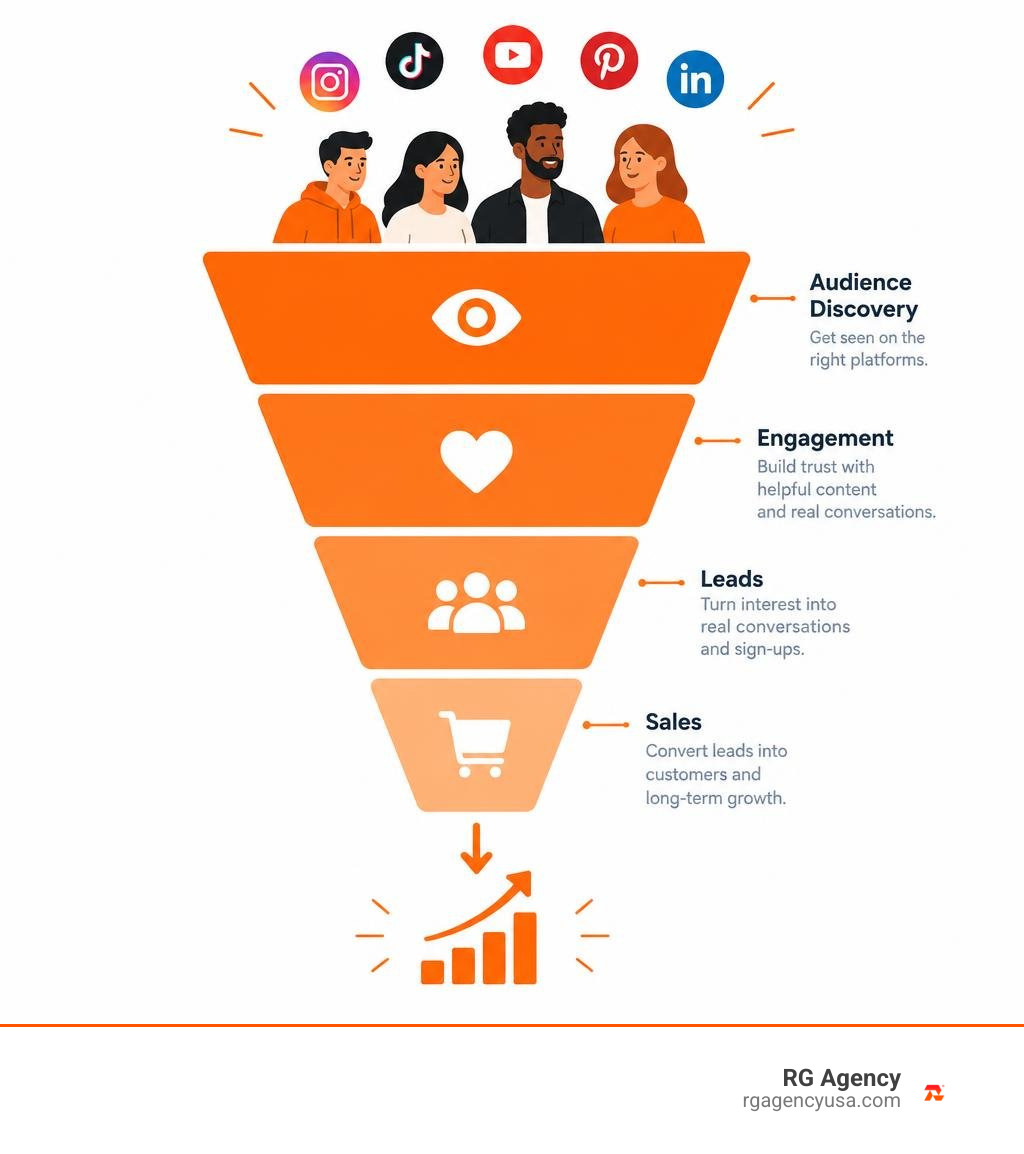
Social media marketing word guide:
What Is Social Media Marketing and Why It Matters in 2026
Modern social media marketing has matured into the central hub of digital brand building and consumer intelligence. As of October 2025, over 6 billion people actively use social platforms across the globe. Today in September 2026, social networks operate not just as communication apps, but as primary search engines, storefronts, customer support desks, and community gathering spaces.
For brands across Texas—from high-growth startups in Austin and Dallas to established industrial service providers in Houston and San Antonio—social channels provide an unfiltered, direct line to consumers. More than 80% of consumers research products online before buying, and 81% believe social media directly increases brand accountability. When customers can publicly ask questions, review experiences, and inspect your latest work, social platforms become your primary trust engine.
In modern strategies, brands focus heavily on creating “sticky content”—media that holds user attention, triggers meaningful conversations, and encourages users to share. This creates earned media: organic word-of-mouth exposure that money cannot buy directly. As explored in Filip Konecny’s guide to building revenue systems, treating social channels as an interconnected customer acquisition engine transforms casual scrolling into predictable business revenue.
Connecting Discovery to Brand Revenue
Posting without an underlying business architecture is like throwing darts in the dark. To generate revenue, we map social interactions directly to clear buyer personas and intentional conversion paths.
Every piece of content must fulfill a clear role within your marketing pipeline:
- Attention & Discovery: Capturing top-of-funnel reach with educational insights or entertaining industry commentary.
- Authority & Proof: Demonstrating case studies, client wins, behind-the-scenes processes, and customer testimonials.
- Direct Conversion: Presenting frictionless offers, clear calls to action, lead magnets, and product demos.
When prospective buyers explore your channels, your profiles must make the next step effortless. Mastering how to be found on social media ensures that profile bios, keyword-optimized descriptions, and linked assets immediately shepherd interested users toward a phone call, booking link, or purchase page.
The Evolution of Modern Algorithms
Social media algorithms no longer serve content strictly based on reverse-chronological feeds or simple follower networks. Instead, platforms prioritize engagement signals, viewing duration, save rates, comment depth, and direct shares.
Modern platforms index spoken audio, on-screen text, and captions to serve posts directly to users searching for specific solutions. If you operate an e-commerce or local service business, mastering short-form video discovery is mandatory. Implementing actionable Instagram Reels optimization strategies allows smaller brands to achieve massive organic visibility by matching algorithm hooks with high-retention editing.
Core Components of an Effective Social Media Marketing Strategy
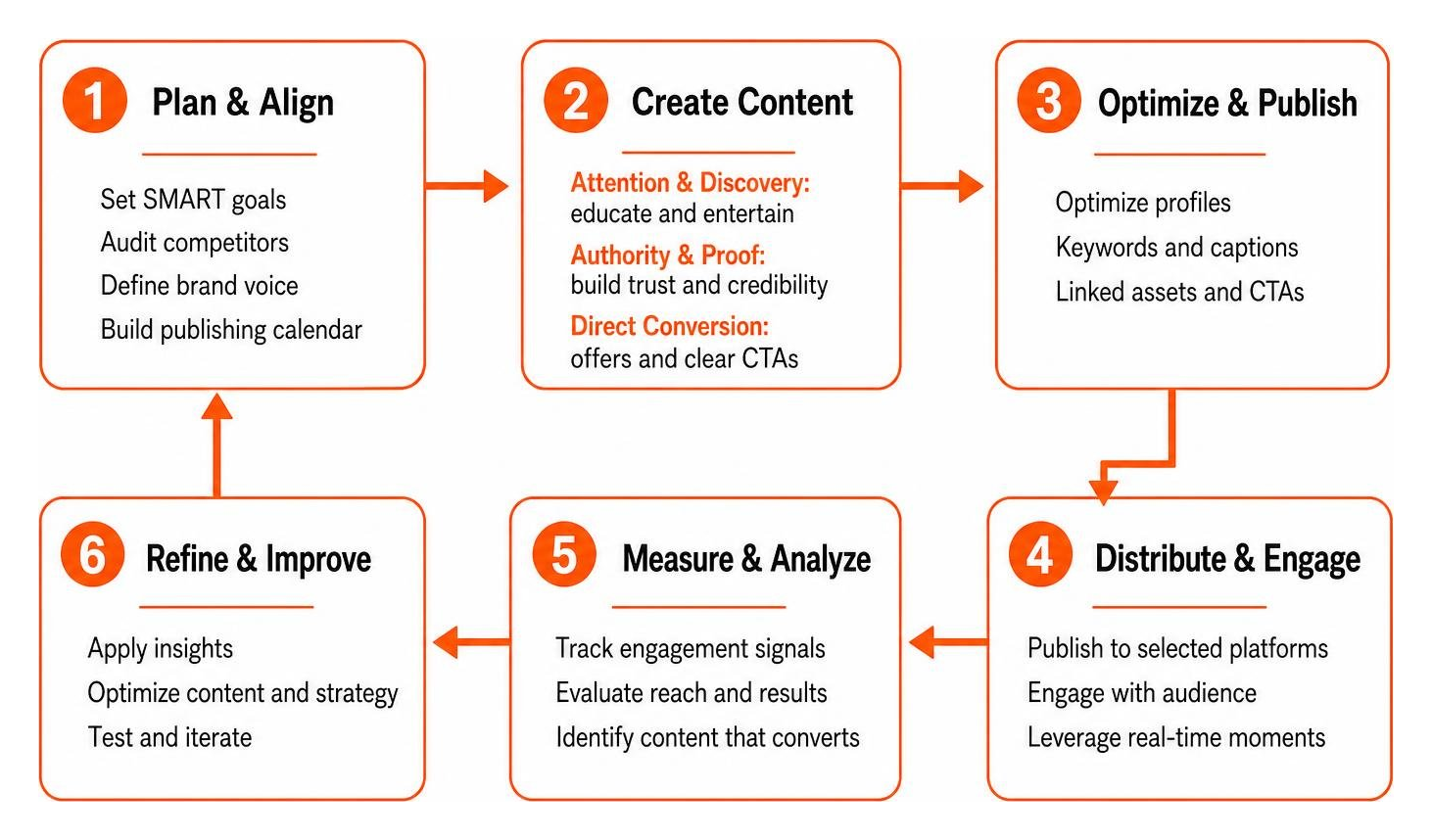
A successful social media program does not rely on spontaneous posting when someone remembers to check an app. It requires a repeatable framework that aligns your team’s creative output with tangible business objectives.

An effective strategy rests on several structural pillars:
- SMART Business Goals: Establishing specific, measurable targets (e.g., generating 40 qualified leads per month or cutting support response time under 15 minutes) rather than vague ambitions like “getting more exposure.”
- Competitor & Market Audits: Analyzing direct competitors to spot content gaps, underserved audience segments, and untapped messaging angles.
- Distinct Brand Voice: Defining a recognizable tone—whether conversational, authoritative, or playful—that remains consistent across every caption, video, and DM reply.
- Publishing Calendar: Structuring planned themes, promotions, and seasonal events in advance while leaving room for agile, real-time social commentary.
Platform Selection and Audience Mapping
Spreading internal resources thin across seven different social networks is a common pitfall. Instead, focus deeply on two to four core channels where your audience spends focused attention.
- LinkedIn: The undisputed powerhouse for B2B lead generation, professional services, corporate recruiting, and executive thought leadership.
- Instagram: Essential for visual storytelling, hospitality, lifestyle brands, local service portfolios, and direct consumer engagement via carousels and Stories.
- TikTok & YouTube (Shorts & Long-Form): Prime destinations for entertainment, deep tutorials, video search discovery, and high-engagement product demonstrations.
- Facebook: Highly effective for community groups, local event awareness, customer reviews, and older demographic segments.
- Pinterest: A visual search engine ideal for home improvement, fashion, event planning, and e-commerce discovery.
Aligning channel strengths with demographic intent prevents wasted creative effort. For comprehensive channel setup and continuous optimization, partnering with professional social media management ensures your team publishes platform-native assets designed specifically for each network’s algorithmic quirks.
Content Architecture and Format Mix
Consistency does not mean repetition. To keep audiences engaged without burning out your creative team, categorize your publishing schedule into distinct content pillars:
| Content Pillar | Primary Objective | Example Asset Formats |
|---|---|---|
| Education & Authority | Solve customer pain points | Document carousels, how-to infographics, quick tips |
| Social Proof & Results | Build trust and lower buying friction | Video testimonials, before-and-afters, client case studies |
| Culture & Community | Humanize the brand | Behind-the-scenes clips, employee spotlights, Q&A livestreams |
| Conversion & Offers | Drive immediate revenue action | Limited-time promotions, product demos, lead magnet teasers |
Visual platforms like Pinterest also offer powerful long-term referral loops. Exploring creative frameworks, such as creator monetization strategies, reveals how evergreen visual pins continue driving organic site traffic months after publication.
Organic vs. Paid Strategies for Brand Growth
A common debate is whether businesses should invest in organic community building or rely entirely on paid advertising. In practice, top-performing brands run them as complementary engines that feed one another.
| Strategic Dimension | Organic Social Media | Paid Social Advertising |
|---|---|---|
| Primary Focus | Relationship building, community, trust | Rapid scaling, direct leads, targeted conversions |
| Speed to Results | Compounds steadily over 3 to 12 months | Immediate traffic upon campaign activation |
| Targeting Precision | Broad algorithmic matching and follower reach | Granular demographic, behavioral, and retargeting filters |
| Longevity | Evergreen content and lasting brand loyalty | Runs as long as ad budget is allocated |
| Cost Structure | Creative production and time investment | Media spend plus creative production and management |
Fundamentals of Organic Social Media Marketing
Organic social media is your digital storefront and customer service desk. It is where existing customers check your credibility, ask questions, and form genuine attachments to your brand personality.
A high-performing organic presence prioritizes one-to-one messaging over one-way broadcasting. Responding to every thoughtful comment within the first hour, initiating conversations in direct messages, and reposting user content turns casual viewers into brand advocates. The comprehensive operational duties outlined in our social media manager guide highlight how community engagement and real-time responsiveness often deliver far higher customer retention than traditional support channels.
Accelerating Growth with Paid Advertising
While organic channels build trust, paid social media advertising allows you to bypass algorithm bottlenecks and place high-converting messages directly in front of ideal prospects.
Paid campaigns let you:
- Target specific job titles, geographic zip codes (across Austin, Dallas, Houston, San Antonio, and Georgetown), and demonstrated purchasing behaviors.
- Retarget website visitors who viewed specific product pages but did not complete a purchase.
- Build Lookalike and Custom Audiences from CRM lists to find new prospects sharing traits with your best existing clients.
- Rapidly A/B test ad hooks, visual creatives, and headlines to see which combinations yield the lowest cost-per-acquisition.
For brands ready to scale lead generation predictably, deploying targeted social media advertising services ensures ad budgets produce measurable return on investment without wasted ad spend.
Social Listening, Creators, and Community Engagement
Modern social media marketing requires tuning into what the market says about your brand, competitors, and industry when you aren’t in the room.

Social Listening vs. Social Monitoring
While many use these terms interchangeably, they perform two distinct roles in your marketing stack:
- Social Monitoring: Reactive tracking of brand mentions, direct tags, hashtags, and direct messages to provide prompt customer support and address complaints in real time.
- Social Listening: Proactive analysis of aggregate conversational data, customer sentiment trends, competitor discussions, and broader industry topics.
Social listening uncovers hidden customer frustrations before they become widespread issues. It helps your product team identify missing features, gives your marketing team inspiration for new content themes, and provides early warning signs during potential PR crises.
Leveraging Influencers and User-Generated Content
Consumers trust everyday peers far more than corporate marketing scripts. Integrating user-generated content (UGC) and micro-influencers into your content schedule injects organic authenticity into your brand narrative.
Micro-influencers—creators with dedicated followings between 5,000 and 50,000 subscribers—often command higher engagement rates and deeper audience trust than mega-celebrities. When partnering with creators, treat them as creative collaborators rather than generic billboard space. If you are a creator or brand looking to build win-win collaboration frameworks, studying best practices for securing brand sponsorships provides insight into structuring authentic, performance-focused partnerships.
Tracking Performance and Campaign Analytics
You cannot improve what you do not measure. However, vanity metrics—such as raw follower counts or passive impressions—often distract teams from evaluating true commercial impact.
Measuring ROI in Social Media Marketing
To present reports that executive leadership trusts, organize your performance metrics into three distinct layers:
- Attention & Discovery Metrics: Impressions, video completion rates, search impressions, and reach. These indicate whether your content hooks are cutting through digital noise.
- Engagement & Trust Metrics: Comments, saves, direct shares, and DM inquiries. These show whether users find your content genuinely valuable.
- Commercial Business Metrics: Click-through rates (CTR), conversion rates, Cost Per Lead (CPL), Customer Acquisition Cost (CAC), and overall Customer Lifetime Value (LTV).
Advanced teams look beyond basic last-click attribution by conducting incrementality testing—comparing conversion rates between audience groups exposed to social campaigns versus unexposed control groups to verify true bottom-line lift.
Managing Common Challenges and Brand Risks
Operating in public social channels brings inherent challenges. Algorithms shift, ad costs fluctuate, and negative customer feedback can appear under your latest announcement.
To protect your brand reputation:
- Establish a Social Governance Plan: Outline who has posting access, define content approval workflows, and establish strict password and two-factor security standards.
- Formulate a Crisis Escalation Protocol: Prepare pre-approved response paths for service outages, shipping delays, or public complaints so your front-line community managers never panic.
- Maintain Ethical Transparency: Ensure all sponsored campaigns, affiliate links, and AI-assisted creatives comply with consumer disclosure guidelines and copyright standards.
Frequently Asked Questions About Social Media Marketing
How long does it take to see results from social media marketing?
Organic momentum typically takes 3 to 6 months of steady, high-value publishing to build an engaged audience and algorithmic authority. However, targeted paid advertising campaigns can drive qualified website traffic and generate inbound leads within days of launch when backed by a validated offer.
Which social media platforms should a business start with?
Start with one or two platforms where your target demographic spends active time. For B2B and professional services, begin with LinkedIn. For visual, consumer-facing, or lifestyle brands, focus on Instagram, TikTok, or Pinterest. Expand to additional channels only after establishing a sustainable publishing and engagement rhythm.
How much budget is needed for social media marketing?
Small businesses can launch organic strategies with minimal software investment ($0 to $100 per month for basic scheduling and graphic design tools). When introducing paid advertising, a monthly ad spend between $1,000 and $3,000 provides enough statistical data to test ad creatives, optimize conversion funnels, and generate consistent inbound leads.
Conclusion
Social media marketing is not a collection of disconnected posting tasks or superficial vanity metrics. When executed properly, it functions as a comprehensive, data-driven system that captures fragmented consumer attention, earns deep audience trust, and converts interest into measurable business revenue.
At RG Agency, we help businesses across Austin, Dallas, Houston, San Antonio, and Georgetown connect social campaigns with SEO, PPC, website conversion optimization, and marketing automation. By integrating your organic and paid channels into an omnichannel growth engine, we turn daily digital interactions into predictable bottom-line growth.
Ready to build a high-converting social media marketing strategy tailored to your business goals? Connect with our team at RG Agency today to claim your custom growth audit.